Publishing is not one upload button. It is a chain of editorial, legal, production, metadata, distribution, commercial, and marketing decisions. A weak link can create the wrong edition, an unreadable eBook, a cover that fails at print size, a rights conflict, a costly return, or a listing that readers cannot find.
The good news is that the process becomes manageable when you choose the publishing model early and complete the work in the right order. Traditional publishing means pitching an agent or acquiring publisher, then collaborating with the publisher’s team under a contract. Self-publishing means becoming the publisher: you choose and pay vendors, control accounts and metadata, approve files, and carry the financial risk.
A third category—paid publishing or hybrid service—requires special care. Some firms provide legitimate services for a disclosed fee; others sell expensive packages using the language of traditional publishing. The contract, rights, account ownership, deliverables, distribution, and refund terms matter more than the label.
|
Factor |
Traditional publishing | Self-publishing | Paid service/hybrid | Who funds production? | Who controls accounts? |
Primary risk |
| Gatekeeper | Agent/editor/acquisitions | Author-publisher | Service selection/contract | Publisher / author / author | Publisher / author / varies | Misreading the model |
| Speed | Often long and scheduled | Author-controlled | Contract/supplier dependent | Varies | Varies | Rushing or delays |
| Creative control | Collaborative; publisher final rights vary | Author final control | Varies by package | Follows contract | Follows contract | Undefined approvals |
| Financial model | Advance/royalties; publisher risk | Author funds; keeps net proceeds | Author pays + possible share | As stated | Payment account owner | Hidden fees/deductions |
| Distribution | Publisher relationships | Platforms/distributors/direct | Claimed channels must be verified | Varies | Often provider unless negotiated | Availability sold as placement |
| Rights | Licensed under publishing contract | Author retains; platform terms | Varies widely | Contract | Contract/account | Overbroad grant |
| Best fit | Strong market/editorial fit and patience | Entrepreneurial control and capability | Specific services with safe terms | Goal-dependent | Goal-dependent | Choosing by prestige/promise |
For much commercial fiction and general nonfiction, an author typically queries literary agents, although some independent and specialist presses accept direct submissions. An agent evaluates fit, may help revise the project, submits to editors, negotiates the publishing agreement, and represents the author through the deal. The agent is normally paid a commission from author income, not an upfront reading or representation fee.
Fiction is usually queried with a complete, polished manuscript. Narrative nonfiction may also need a full manuscript, while many prescriptive or idea-led nonfiction projects are pitched with a proposal, market analysis, chapter outline, author platform, and sample chapters. Each agency’s instructions control.
A legitimate traditional publisher pays the author—often through an advance and royalties—and bears ordinary production and distribution costs. The author grants defined rights for defined territories, languages, formats, and terms. That is not the same as permanently giving away “all rights.” Read the license, options, noncompete, warranties, indemnity, accounting, audit, reserve, out-of-print, and reversion clauses.
A self-publisher is responsible for the functions a publishing house would otherwise provide: project management, editing, fact-checking, permissions, design, formatting, metadata, ISBN assignment, accounts, pricing, proofing, distribution, launch, bookkeeping, and long-term maintenance. You can hire specialists without surrendering the publisher role.
Self-publishing can be faster and offers more control, but control is work. It does not mean every decision should be made alone or that a book can skip editorial and production standards. Build a team that fits the book, audience, risk, and budget.
A paid service can be useful when deliverables are specific and the author retains informed control. Ask who owns the ISBN, files, cover, source files, metadata, platform accounts, customer data, and rights. Get the exact distribution channels, wholesale terms, revision rounds, print costs, royalty formula, sales statements, marketing tasks, and exit process in writing.
Never assume a company is a traditional publisher because it calls itself selective, promises bookstore placement, displays retailer logos, or requests a large fee. Barnes & Noble Press currently warns that Barnes & Noble will not ask authors to pay for in-store placement. Verify every outreach through the platform’s official contact channel.
|
Stage |
Traditional path | Self-publishing path | Typical dependencies | Decision gate |
Output |
| Concept/brief | Proposal or manuscript strategy | Publishing brief/business goal | Audience and comps | Viable reader promise | One-page brief |
| Manuscript | Complete/revise per genre | Complete/revise | Research/permissions | Ready for external edit | Stable draft |
| Editorial | Agent/publisher process | Hire/manage specialists | Scope and schedule | Text approved | Final manuscript |
| Rights | Publisher clears/author warrants per contract | Author clears | Permission lead times | All uses documented | Rights log |
| Production | Publisher manages | Author manages | Trim/pages/files | Proof approved | Print/EPUB/audio files |
| Identifiers | Publisher assigns | Author/provider assigns | Agency/platform rules | Product map approved | ISBN/ASIN records |
| Metadata | Publisher feeds accounts | Author/distributor feeds | Files/assets/pricing | Consistent source data | Live metadata set |
| Distribution | Publisher sells in | Author activates channels | Discount/returns/territory | No conflicts | Orderable products |
| Launch | Publisher + author | Author/team | Availability/audience | Assets and tracking ready | Release |
| Maintenance | Publisher under contract | Author-publisher | Reports/changes/policies | Reconcile and update | Healthy backlist |
Timelines overlap and vary. A traditional path can include months or years of querying and acquisition before production. A self-publisher can move faster, but a rushed proof, incomplete permissions process, or untested launch can create expensive corrections. Set the publication date after the manuscript, team, and production complexity are understood.
Write a one-page publishing brief before hiring anyone. State the genre or subject, target reader, comparable titles, problem or promise, word count, illustrations or tables, formats, territories, accessibility needs, launch objective, and what success means.
A novel may optimize for reader immersion and series growth. A business book may support speaking and client acquisition. A scholarly monograph may prioritize peer review, libraries, citations, and long-term access. A family history may need only a high-quality private print run. The intended outcome controls the path and budget.
Complete the draft before line-level polishing. Revise structure, argument, plot, pacing, chapter order, continuity, evidence, permissions, and reader promises. For fiction, track character arcs, timeline, point of view, stakes, and scene purpose. For nonfiction, verify claims, sources, examples, citations, permissions, and actionable outcomes.
Beta readers can reveal confusion and unmet expectations, but they are not a substitute for professional expertise. Select readers from the intended audience, ask focused questions, and look for patterns rather than obeying every opinion.
Editing labels vary, so define the deliverable in the contract. A developmental edit addresses the book’s architecture. A line edit improves prose and flow. Copyediting enforces correctness and consistency. Proofreading checks the final formatted pages. Fact-checking, sensitivity reading, technical review, indexing, and legal review are separate services when needed.
|
Editorial service |
Primary question | Best time | Deliverable | Not the same as |
Quality check |
| Manuscript assessment | What needs work? | Before major revision | Diagnostic report | Developmental edit | Specific prioritized evidence |
| Developmental edit | Does structure/argument/story work? | Early/mid revision | Editorial letter + manuscript notes | Copyedit | Scope and examples |
| Line edit | Is prose clear and effective? | After structure stabilizes | Sentence-level revision/comments | Proofread | Voice preserved |
| Copyedit | Is language correct and consistent? | Near-final manuscript | Marked manuscript/style sheet | Fact-check | Defined style and query log |
| Fact/technical review | Are claims and instructions accurate? | Before final layout | Source/query record | Copyedit | Primary evidence checked |
| Indexing | How can readers retrieve concepts? | After stable pagination | Index entries/pages | Search keywords | Coverage and cross-references |
| Proofreading | Did errors survive/enter production? | Final formatted files | Corrections list | Copyedit | Actual print/EPUB proof |
| Accessibility review | Can diverse readers use it? | During design + final testing | Issue list/remediation | Aesthetic review | Semantic/device tests |
Do not proofread before pagination and then assume the final files are clean. Layout can introduce bad line breaks, missing text, shifted tables, widows, or incorrect page references. The last proof must be performed on the actual print and eBook outputs.
Create a rights log for quotations, images, maps, lyrics, screenshots, recipes, charts, trademarks, endorsements, contributor material, and licensed datasets. Record the source, owner, requested use, formats, languages, territories, term, credit line, fee, evidence, and expiration.
Fair use or fair dealing is fact-specific and jurisdiction-specific; there is no universal safe word count. Song lyrics, poetry, images, and commercial excerpts can be particularly sensitive. Obtain legal advice for meaningful risk instead of relying on an internet rule.
Copyright commonly arises automatically when an eligible original work is fixed, but registration, enforcement, remedies, deposit, and notice rules vary by country. An ISBN does not register copyright. Consult the relevant copyright office or counsel for the intended markets.
|
Product |
Core file | Identifier | Key production decisions | Channel question | New edition trigger |
QA |
| Paperback | Print-ready PDF | ISBN | Trim, paper, bleed, margins, cover wrap | POD/offset/wholesale/direct | Material change/new publisher | Physical proof |
| Hardcover | Print-ready PDF | Separate ISBN | Case/dust jacket, spine, paper | Printer/distributor availability | New binding/edition | Physical proof |
| Large print | Accessible print PDF | Separate ISBN | Legibility, trim, spacing, labeling | Library/accessibility supply | Distinct edition | Reader test/proof |
| EPUB | Reflowable EPUB | ISBN if channel uses; not KDP-required | Semantics, navigation, images, alt text | Retailer/aggregator rules | Distinct digital product | Device/a11y tests |
| Kindle eBook | EPUB upload | ASIN; no ISBN required by KDP | KDP conversion/preview | KDP territories and terms | New Amazon edition policy | Kindle preview |
| Fixed-layout eBook | Fixed-layout EPUB | Channel-specific | Device support, zoom, alt text | Which stores accept? | Material product change | Multiple devices |
| Audiobook | Mastered audio | ISBN where used + platform IDs | Narration, rights, chapters, mastering | Distribution and exclusivity | New narration/language | Full listen |
| Translation | Format-specific | New ISBN by product | Rights, translator credit, locale | Territory/channel | Each language edition | Native-language proof |
| Boxed set/bundle | Package files/assets | May need set/product ID | Components, packaging, price | Separately orderable? | New set composition | Fulfillment test |
| Special edition | Format-specific | New ISBN if distinct edition | Added content/materials/specs | Inventory and price | Distinct product identity | Proof + metadata check |
A paperback and hardcover are separate products and need separate ISBNs. A large-print edition is not merely a bigger font file; it should meet reader needs through appropriate typography, spacing, trim, navigation, and cover labeling. An audiobook requires narration, audio production, rights, mastering, and platform metadata.
For eBooks, EPUB is the current interoperable format for most distribution workflows. Amazon KDP accepts EPUB uploads; MOBI is no longer the general production target described in older self-publishing guides. Test reflow, navigation, images, tables, footnotes, links, language, alt text, and screen-reader behavior.
Decide which legal person or company will be the publisher, pay vendors, own accounts, receive income, and maintain records. Select an imprint name only after checking business, trademark, domain, and platform considerations. An imprint is a publishing brand, not automatically a separate legal entity.
Create platform accounts in the publisher’s name and retain recovery access, tax records, payment settings, source files, and contributor permissions. A service provider can be granted the minimum access necessary without owning the account.
ISBNs come from the national or regional agency responsible for the publisher’s location. In the United States, Bowker is the official ISBN Agency. A service can supply an ISBN from its own block, but that affects the registrant or displayed imprint and may restrict use.
Amazon KDP offers free ISBNs for eligible print books and says those numbers display “Independently published.” Kindle eBooks do not require an ISBN and receive an ASIN. If you use your own ISBN on KDP, the registered imprint information must match.
Assign one ISBN to one eligible edition and format, enter accurate metadata, and never reuse a published number. An ISBN identifies the product; it does not prove copyright or decide royalties.
Choose trim size, binding, paper, color, bleed, and margins before final layout. Use styles consistently, manage recto/verso starts intentionally, embed fonts as required, keep images at suitable resolution, confirm black and color handling, generate an accessible table of contents where appropriate, and export to the printer’s PDF specification.
Build a semantic EPUB with headings, lists, tables, landmarks, language metadata, a linked table of contents, meaningful link text, and alt text for informative images. Avoid using spaces or tabs to force layout. Complex fixed-layout eBooks require platform-specific testing and may have accessibility and device limitations.
Confirm audio rights, script pronunciation, narrator terms, pickup policy, chapter structure, opening and closing credits, mastering specifications, retail sample, cover square, and delivery metadata. Decide whether the narrator is paid upfront, shares royalties, or works under another agreement.
A cover is a sales and production asset. It should communicate genre and promise at thumbnail size, remain legible, use licensed fonts and images, and fit the exact trim, page count, paper, binding, and bleed template. The print wrap includes back, spine, and front; spine width cannot be finalized before pagination and printer specifications are fixed.
Reserve a compliant barcode area when needed. The ISBN is the number; the EAN-13 barcode is its machine-readable retail representation. Validate the encoded digits, check digit, resolution, contrast, quiet zones, and price add-on at final size.
|
Metadata field |
Why it matters | Traditional owner | Self-publisher owner | Source of truth |
Common error |
| Title/subtitle | Identity and validation | Publisher | Author-publisher | Approved title sheet | Mismatch across cover/account |
| Contributors/roles | Credit and discovery | Publisher | Author-publisher | Rights/editorial record | Missing editor/translator role |
| Edition/format | Correct fulfillment | Publisher | Author-publisher | Product map | One ISBN across formats |
| Imprint/publisher | Supply-chain identity | Publisher | ISBN registrant | Agency record | Confusing brand/legal entity |
| Description | Conversion and positioning | Marketing/editorial | Author/marketer | Approved copy deck | Keyword-stuffed claims |
| Categories/subjects | Discovery/routing | Metadata team | Author/publisher | Channel strategy | Irrelevant categories |
| Audience/age | Reader fit and policy | Publisher | Author-publisher | Editorial brief | Unsupported age range |
| Price/currency | Availability and economics | Sales team | Author-publisher | Pricing model | Ignoring tax/print cost |
| Territory/rights | Where sale is authorized | Rights team | Author-publisher | Rights log | Worldwide claim without rights |
| Availability/date | Preorder and ordering | Operations | Author-publisher | Launch plan | Conflicting dates/status |
| Files/assets | Customer experience | Production | Author/vendor | Version-controlled source | Old cover/interior uploaded |
Metadata must be consistent across the ISBN agency, distributor, platform, cover, copyright page, website, and marketing assets. Title and contributor mismatches can delay validation or fragment listings. Rich descriptions and categories help discovery, but keyword stuffing, irrelevant categories, and unsupported claims can violate platform policy and disappoint readers.
|
Channel |
Best for | Identifier behavior | Economics to model | Major risk |
Verification |
| KDP Kindle | Amazon eBook reach | ASIN; ISBN not required | Royalty plan, delivery, tax | Exclusivity if separate program chosen | KDP help/preview |
| KDP print | Amazon POD + optional expansion | Own/free ISBN for eligible print | Rate, print cost, thresholds | Assuming expansion guarantees orders | KDP calculator/help |
| IngramSpark/wholesale | Wide trade availability/POD | Publisher ISBN and account rules | Discount, print, fees, returns | Conflicting distribution/returns | Current agreement/calculator |
| Barnes & Noble Press | BN.com/NOOK/direct platform | Platform rules | Royalty/print/territory | Assuming store placement | B&N Press official |
| Draft2Digital | Aggregated eBook/other services | Channel/aggregator rules | Revenue share, storefronts | Overlapping retailer accounts | Current terms |
| Direct store | Bundles/high margin/customer data | SKU/order ID; ISBN where product uses | Processing, fulfillment, tax, refunds | Operational workload | Test transaction |
| Offset printer | Large-volume/special production | Publisher ISBN on product | Unit + freight + storage + waste | Unsold inventory | Physical proof/landed quote |
| Library/institutional vendor | Institutional access | ISBN + platform/license IDs | License, discount, access model | Availability confused with selection | Vendor listing |
| Audiobook distributor | Audio retailers/libraries | Audio/product IDs | Narrator, platform share, exclusivity | Rights and term | Current agreement |
Using more than one print service can be effective, but map each channel. For example, a publisher may use KDP for Amazon manufacturing and another distributor for wider wholesale reach. The same unchanged publisher’s product can sometimes use the same ISBN across compatible printers, but it should not be submitted into overlapping or conflicting distribution networks. Confirm both providers’ current rules before activating distribution.
Bookstore availability is not bookstore placement. A wholesale listing can make a book orderable; individual stores decide what to stock based on demand, discount, returnability, fit, quality, and local policy. Returns can create significant financial exposure, including print and shipping charges. Model best, expected, and worst cases.
Start with comparable reader prices, then calculate channel economics. Include print cost, retailer or wholesale share, distributor fee, delivery fee, payment processing, tax treatment, returns, shipping, storage, advertising, agent commission, service fees, and currency conversion.
A high royalty percentage can produce little money when the base is small or print cost is high. Use the current platform calculator for every trim, page count, marketplace, and format. The ISBN does not change the formula.
A launch plan connects positioning, availability, audience, and measurement. Build a product page and author site, email list, advance-reader process, publicity list, retailer metadata, launch assets, events, partnerships, and paid-media test plan appropriate to the book.
Follow retailer review policies. Do not buy deceptive reviews, require positive sentiment, or offer incentives that violate platform rules. Advance readers can receive copies for honest review where allowed, with transparent disclosure.
Set measurable objectives: preorder conversions, email growth, event attendance, qualified leads, direct contribution margin, retailer sell-through, library requests, course adoption, or rights inquiries. “Bestseller” is not a complete business goal.
The author completes and revises the novel, gets targeted feedback, polishes the manuscript, researches agents who represent the genre, and follows each query guideline. The author does not buy an ISBN or design the final cover; the acquiring publisher will define and assign products. If offered a deal, the author reviews rights, advance, royalties, options, noncompete, warranties, accounting, audit, and reversion with the agent and, where appropriate, a lawyer.
The author has clients, an email list, speaking engagements, and a clear direct-sales channel. Self-publishing offers schedule and offer control. The author hires editing and design, creates paperback and EPUB products, buys ISBNs for the planned trade products, uses direct fulfillment for high-margin bundles, and uses print-on-demand for broad availability. Success is measured in book contribution margin, qualified leads, speaking inquiries, and client conversion—not only retailer rank.
Color accuracy, trim, bleed, typography, picture-text relationship, proofing, printing method, unit cost, age metadata, accessibility, and shipping drive the plan. A short-run offset print may lower unit cost at volume but creates inventory risk; print-on-demand lowers inventory risk but can have higher unit cost and fewer material options. The publisher tests physical proofs and calculates landed cost before committing.
The company praises the manuscript and requests a large fee while promising broad distribution and bookstore placement. The author asks for the contract, itemized deliverables, comparable titles, author references, ISBN registrant, account ownership, wholesale terms, return policy, source-file rights, marketing tasks, sales statements, cancellation, and refund conditions. Any claim of paid guaranteed in-store placement is independently verified through the named retailer’s official site.
Budgets vary enormously by length, complexity, market, professional experience, region, and how much work the author performs. Avoid a single “average cost” presented as a rule. Build a quote-based budget with contingency.
Request scope, assumptions, rounds, file ownership, handoff, schedule, and payment terms from every vendor. Preserve a contingency for corrections and platform changes.
A self-published book can be produced in months once the manuscript is final; complex books take longer. Traditional acquisition and publication often take substantially longer because querying, contracting, editorial schedules, sales cycles, and production are involved.
Not for self-publishing. Many major trade publishers accept primarily agented submissions, while some independent, academic, specialist, and open-submission presses accept authors directly. Follow the publisher’s guidelines.
Generally yes for debut fiction. Nonfiction submission requirements vary; many proposals include sample chapters rather than a completed manuscript.
A professional edit can materially improve a book, but the appropriate service and budget depend on the project. Define the problem, sample the editor’s work, and avoid paying for a copyedit when the structure is still changing.
Bowker is the official U.S. ISBN Agency. Commercial services can supply numbers from their own blocks; confirm registrant, imprint, and use restrictions.
KDP says Kindle eBooks do not require an ISBN and receive an ASIN. Other distribution channels may use an ISBN for a distinct digital product.
Many publishers use more than one service, but overlapping distribution and identifier rules must be coordinated. Confirm the current policies and channel scope before activating both.
It can make the book available to order. Stocking decisions depend on demand, discount, returns, availability, metadata, quality, and buyer policy.
No as a general production workflow. Amazon KDP accepts EPUB and converts it for Kindle. Validate the current supported-file list and preview the result.
No. ISBN identifies a publication product. Copyright and any registration procedure are separate.
Yes, if the imprint is available and correctly registered in the relevant ISBN and platform systems. An imprint is a brand; legal and tax structure are separate.
There is no responsible single figure. Cost depends on manuscript condition, word count, editing, design, illustrations, formats, audio, permissions, print method, and marketing. Build an itemized budget from quotes.
Verify identities and claims independently, search for complaints, read the complete contract, reject pressure tactics and guaranteed placement, keep control of accounts, and obtain professional contract advice for large commitments.
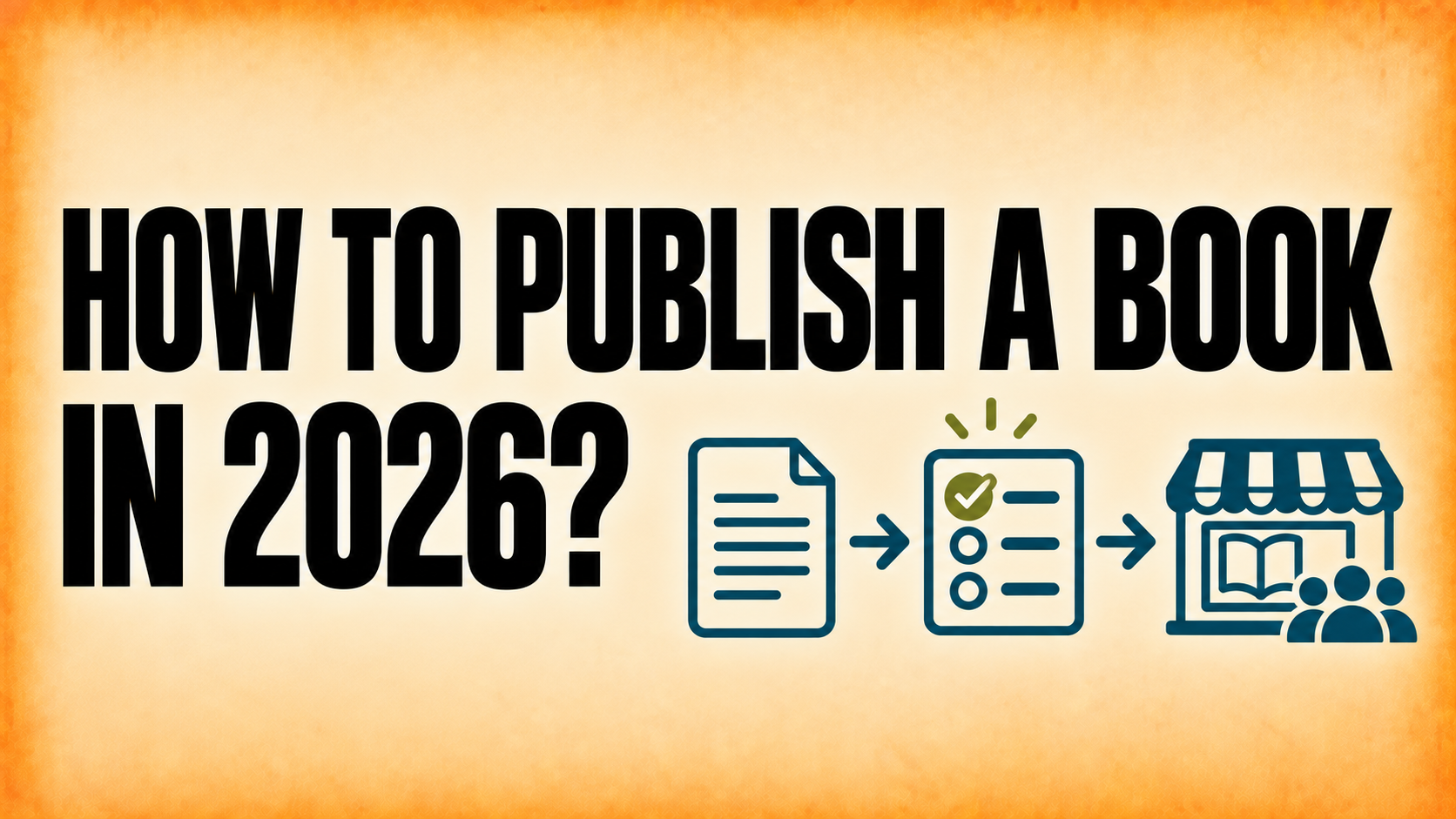
Publishing a book is a managed sequence: define the audience and outcome, choose the business model, finish the manuscript, clear rights, create distinct products, assign accurate identifiers and metadata, proof every file, select channels, price with real costs, launch to a reachable audience, and maintain the edition.
Traditional and self-publishing can both produce excellent books. The right path is the one whose economics, rights, schedule, team, reach, and responsibilities match the author and project. Treat every promise as a contract term, every format as a product decision, and every live listing as something to verify. That is how a manuscript becomes a book readers can actually buy, access, and trust.