There is nothing quite like the feeling of holding your newly printed book in your hands for the first time. But for many independent authors, the ultimate dream is seeing that spine lined up on a shelf in a local bookshop or major retail chain. So, do you need your own ISBN to sell books in stores?
The short answer is yes. If your goal is to have physical books stocked in brick-and-mortar bookstores, you absolutely need to purchase your own ISBN. Free ISBNs from self-publishing platforms lock your book to their specific ecosystem and are frequently rejected by physical retailers.
When you start looking into how to actually get your book from your desk onto those retail shelves, you quickly hit a wall of confusing publishing jargon. Navigating self-publishing identifiers, understanding the mechanics of wholesale retail distribution, and figuring out who exactly holds the “publisher of record” rights can feel incredibly overwhelming.
Let’s cut through the noise. We are going to break down exactly how these numbers work, why physical bookstores are so strict about them, the hidden trap behind “free” identifiers, and how taking ownership of your book’s metadata is the best move you can make for your writing career.
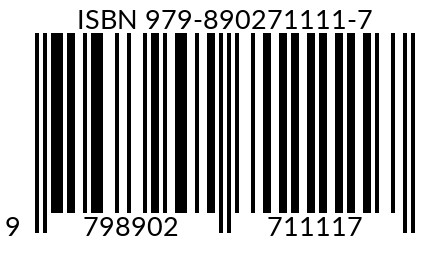
Before we figure out if you need your own ISBN to sell books in stores, it helps to know what the number actually does. ISBN stands for International Standard Book Number. It’s a unique, 13-digit commercial identifier assigned to each specific edition and variation of a book.
Think of an ISBN as your book’s fingerprint or its passport. Embedded within that 13-digit number is vital structural information encoded in its digits: a prefix element, a registration group identifier (country/language group), a publisher/registrant identifier, a title identifier, and a check digit. Separately, a metadata record associated with your ISBN in databases like Bowker’s will store your book’s details, including:
When a bookstore buyer, a librarian, or a major distributor scans a barcode or searches their inventory database, the ISBN is the anchor that pulls up all the correct information. Without one, your book essentially does not exist in the traditional book supply chain.

The blunt, straightforward answer is: Yes. If your goal is to have your physical books stocked on the shelves of brick-and-mortar bookstores, you absolutely need your own ISBN. While the digital publishing revolution has completely changed how readers buy eBooks online, physical bookstores still operate on very traditional, deeply entrenched inventory systems. Here is the reality of why physical bookstores won’t budge on this requirement:
Physical retail stores require products to have a scannable barcode for their inventory and point-of-sale systems. Cashiers aren’t typing titles into a register. For books, this barcode (specifically called an EAN-13 barcode) is generated directly from your 13-digit ISBN. If a bookstore’s scanner can’t read your book, they simply won’t stock it
Note: If you change the retail price of your book, you will need a new barcode to reflect that change, but the ISBN itself does not need to be replaced simply because the price changed.
This is a huge misconception for many first-time authors: bookstores rarely buy books directly from authors who walk in off the street. Instead, they order their inventory at a wholesale discount through massive book distributors like Ingram. To even get your book listed in these distributor catalogs so a bookstore can order it, an ISBN is a mandatory requirement.
Bookstores have incredibly limited real estate. Store managers have to be ruthlessly selective about what gets shelf space. When a buyer looks up your book, they are looking for professional metadata. Having a recognized, properly registered ISBN signals that you are running a serious publishing business, not just printing off a weekend hobby project.
If you have started poking around self-publishing platforms, you are probably thinking: “Wait a minute. Amazon KDP and Draft2Digital offered me a free ISBN. Can’t I just use that to get into physical bookstores and save some money?”
It is totally understandable that you would want to save cash where you can, but accepting a free ISBN is one of the biggest roadblocks to physical retail distribution.
When you accept a free ISBN from a platform like Amazon KDP, they become your Publisher of Record. That 13-digit number is legally tied to Amazon’s publishing arm, and its use is strictly limited to its platform.
Note on the “free” ISBNs: A free KDP ISBN can only be used within KDP; it cannot be transferred or used to publish elsewhere. This doesn’t mean the number is ‘locked forever’ in a permanent sense; it simply means you would need a new ISBN if you switch platforms, which is standard practice when switching distributors.
Here is why that free number hurts your physical retail chances:
Important caveat: Amazon KDP and Draft2Digital are not the only platforms offering free ISBNs. IngramSpark also now offers free ISBNs for US self-publishers. However, the same limitations apply, a free ISBN from any platform will list that platform as the publisher of record, limiting your independence and retail options.
If you are genuinely serious about using an ISBN to sell books in stores, buying your own is the only way to retain your independence and ensure wide acceptance from retail buyers.
A: Yes, you do. The publishing supply chain requires a unique ISBN for every distinct physical (or audio) format. If you release a paperback, a hardcover, and an audiobook, you need three separate ISBNs. Think about it from a bookstore’s perspective: if a customer orders the hardcover version for a gift, but the paperback and hardcover share the exact same ISBN, the store’s ordering system won’t know which physical object to ship to them.
A: This largely depends on where you want to sell them. If you only plan to sell your eBook on Amazon, they don’t require an ISBN (they just assign it a proprietary ASIN number). For digital libraries like OverDrive, an eBook ISBN is highly recommended and sometimes required. However, a major retail platforms like Apple Books and Barnes & Noble Nook do not actually require an ISBN to list you eBook, though having one is still recommended for discoverability and professional credibility across distribution channels.
A: Not automatically. The ISBN is just the number itself. The barcode is the scannable image of that number. When you buy an ISBN through a provider like ISBN Services, you can easily add on the barcode graphic file. You’ll then give that file to your cover designer to place on the back cover of your book.
A: If you are just fixing a few embarrassing typos you caught after publication, tweaking the cover art slightly, or changing the retail price, you can keep the same ISBN. However, if you add a new chapter, write a new foreword, or make major structural edits, industry standards require you to issue a brand new ISBN and call it a “Second Edition.”
Writing the book is only half the battle; understanding how the book business works is the other half. When you ask, “Do you need your own ISBN to sell books in stores?” The answer always comes back to control and accessibility.
While free ISBNs are fine if you only ever want to exist as a digital file on one website, they strip away your rights as the publisher of record and close the doors to brick-and-mortar stores. By investing in your own identifiers through trusted providers like ISBN Services, you guarantee that your book can be ordered, stocked, and sold anywhere in the world. Treat your writing like a business, own your metadata, and get ready to see your book on the shelves!