ISBN vs UPC: Which Identifier Does Your Book Need?

ISBN vs UPC

An ISBN identifies a specific book product—its publisher, edition, language, and format—inside the publishing supply chain. A UPC identifies a general retail trade item in point-of-sale and inventory systems. Most ordinary books need an ISBN, not a separate UPC. The ISBN is converted into the EAN-13 barcode commonly printed on the back cover.

A separate UPC may be appropriate when a retailer requires one for a non-book product or when you sell a bundle, such as a book packaged with cards, a toy, or merchandise. Confirm the retailer’s onboarding requirements before purchasing extra identifiers.

ISBN vs UPC at a Glance

Attribute

ISBN

UPC / GTIN-12

Primary scope Books and book-like publication products General retail trade items
Length 13 digits; older records may show ISBN-10 12 digits in a UPC-A symbol
Administered by International ISBN system; national or regional agencies GS1 system
Identifies Publisher, edition, language, and format through linked metadata One retail trade item linked to retailer or supplier data
Common users Publishers, booksellers, libraries, distributors Retailers, brands, warehouses, POS systems
Typical barcode EAN-13 / Bookland EAN created from ISBN-13 UPC-A encoding a GTIN-12
Ordinary printed book Usually needs ISBN; no extra UPC by default Only if a specific channel or different trade item requires it
Bundle or merchandise ISBN stays with the enclosed book edition Bundle or non-book product may require its own GTIN
Reuse Never for a different publication Follow current GS1 GTIN management rules; do not reassign casually

What Is an ISBN?

ISBN stands for International Standard Book Number. The current ISBN is a 13-digit identifier assigned to one publication product from one publisher. It lets booksellers, distributors, libraries, wholesalers, metadata services, and readers distinguish exactly which version they are ordering.

The five ISBN elements are a 978 or 979 prefix, registration group, registrant, publication element, and check digit. The number itself is not a catalog description; it is a stable key that connects to metadata such as title, contributor, format, edition, publisher, price, and publication date.

A paperback, hardcover, revised edition, translation, and separately identified ebook are different products and normally require different ISBNs. An unchanged reprint in the same format normally retains its number. ISBNs do not expire, do not prove copyright, and should not be reused for a different publication.

Who issues ISBNs in the United States?

Bowker is the official ISBN agency for publishers physically located in the United States and its territories. The International ISBN Agency coordinates the system globally and lists the agency responsible for each jurisdiction. The publisher should obtain identifiers through the correct national or regional agency and verify how the publisher-of-record information will appear.

What Is a UPC?

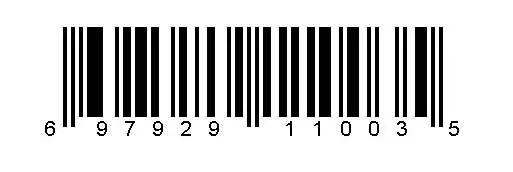
UPC usually refers to the 12-digit Universal Product Code used in North American retail. In GS1 terminology, the number encoded in a UPC-A barcode is a GTIN-12. It identifies a trade item so a retailer can connect the scanned code to its own description, price, inventory, and ordering data.

GS1 issues company prefixes or individual GTINs under its current licensing and registration rules. A legitimate identifier must be unique to the specific trade item and managed by the brand owner. Copying a code, inventing a random number, or reusing a retired identifier can create catalog collisions and retailer rejection.

The black bars are the data carrier; the identifier is the number. A UPC is not the same thing as a SKU. A retailer’s SKU is an internal stock code, while a GTIN is intended for standardized trade-item identification across organizations.

How a Book ISBN Becomes a Scannable Barcode

Scannable Barcode

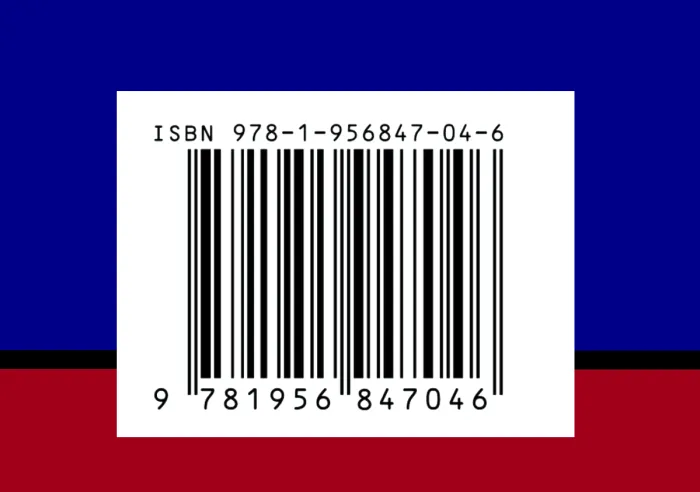
A 13-digit ISBN is compatible with the GTIN-13 system. For a printed book, a barcode generator encodes the ISBN in an EAN-13 symbol, often called the Bookland EAN barcode. The human-readable ISBN is normally printed above or below the symbol.

Publishers may add a separate five-digit EAN supplemental symbol to communicate a suggested price or a special price code. That five-digit add-on is not a UPC. The selling retailer may ignore the printed price and use the ISBN/GTIN to retrieve its current price from its database.

Do not place a random UPC beside the ISBN barcode just because the book will be sold in a general retail store. Many retail systems can scan EAN-13 symbols. If a particular buyer or distributor requires a GTIN-12 or a specific labeling configuration, obtain its written specification and design the package to that requirement.

When a Book Might Need a Separate UPC or GTIN

1. A book-plus-merchandise bundle

A boxed set containing a book and flashcards, a journal and pen, or a children’s book with a toy is a different trade item from the book by itself. The book retains its ISBN, while the consumer bundle may need its own GTIN for retail scanning. The outer-package code identifies the bundle; the ISBN still identifies the enclosed book edition.

2. A non-book product sold by the publisher

Cards, games, apparel, mugs, and other merchandise are outside the ISBN system. They generally use the identifier required for that product category and sales channel. Do not assign an ISBN simply because the product is related to an author or a book.

3. A retailer-specific onboarding requirement

A retailer or marketplace may request a GS1-issued GTIN, apply an exemption, or accept the book’s ISBN/GTIN-13. Requirements can vary by category and can change. Ask what identifier length, barcode symbology, packaging level, and label placement the buyer accepts before commissioning artwork.

Three Practical Publishing Scenarios

Scenario 1: Paperback sold through bookstores and online book retailers

Assign the paperback its own ISBN, register complete metadata, and generate a standards-compliant EAN-13 book barcode. Do not buy a separate UPC unless a named retailer documents that requirement.

Scenario 2: The same title in paperback, hardcover, and ebook

Use a different ISBN for the paperback and hardcover. If the ebook is assigned an ISBN, it also gets a different one. A Kindle ebook on Amazon KDP can use an ASIN without an ISBN, but an ASIN is an Amazon identifier and does not replace an ISBN elsewhere.

Scenario 3: Gift box with a hardcover, bookmark, and art cards

The hardcover keeps its ISBN. Treat the sealed gift box as a separate trade item and obtain the GTIN required by the stores that will stock the bundle. Inventory the book and the gift box as separate products so sales and replenishment remain accurate.

Identifier and Barcode Workflow

  1. 1. List every item and packaging level you will sell.
  2. 2. Separate publication products from general merchandise and bundles.
  3. 3. Assign an ISBN to each qualifying book format and edition.
  4. 4. Confirm retailer or distributor GTIN rules for non-book items and bundles.
  5. 5. Register accurate title or product metadata before launch.
  6. 6. Generate the correct barcode symbology from the assigned number.
  7. 7. Place the barcode in the cover or package artwork using the printer’s specifications.
  8. 8. Scan-test printed proofs and verify that the human-readable number matches the metadata.

Common ISBN and UPC Mistakes

  • Calling ISBN Services the official U.S. ISBN agency instead of correctly identifying Bowker.
  • Describing the standard ISBN book barcode as a UPC-A symbol.
  • Confusing the optional EAN-5 price add-on with a separate UPC.
  • Reusing one ISBN for paperback, hardcover, and a separately identified ebook.
  • Buying a UPC before confirming that a retailer actually requires it.
  • Assigning an ISBN to a merchandise bundle instead of identifying the book and bundle separately.
  • Generating a barcode from an unassigned or mistyped number.
  • Allowing the barcode number, copyright page, and retailer metadata to disagree.

Pre-Launch Checklist

  • The ISBN belongs to the correct publisher of record.
  • Each format and edition has the correct unique ISBN.
  • The title, author, imprint, format, price, and publication date are registered accurately.
  • Any non-book item or bundle uses the retailer-required GTIN.
  • The printed symbol matches the number and required barcode type.
  • The barcode is sharp, correctly sized, and placed on a quiet, high-contrast area.
  • A physical proof scans successfully before the production run.

Frequently Asked Questions

Is an ISBN the same as a UPC?

No. An ISBN identifies a publication product. A UPC/GTIN-12 identifies a general retail trade item. A 13-digit ISBN can be encoded as the EAN-13 barcode used on books.

Do books have UPC codes?

Most books use an ISBN encoded in an EAN-13 book barcode. A separate UPC may be used for a non-book retail item, a bundle, or a documented retailer requirement.

What is the five-digit barcode next to a book ISBN?

It is usually an EAN-5 price add-on. It can represent a suggested price or a special code. It is not a 12-digit UPC.

Can I create my own book UPC?

Do not invent a standardized identifier. Use the ISBN assigned by the responsible ISBN agency for the book, and obtain any required GTIN through GS1 or another retailer-approved route.

Can one ISBN identify both paperback and hardcover?

No. They are different product forms and require separate ISBNs.

Does an ebook need a barcode?

No physical barcode is needed for a digital-only sale. The ebook’s identifier requirements depend on the platform and distribution plan.

Is a barcode included automatically with an ISBN?

An ISBN is a number; a barcode is a graphical representation generated from it. Some services sell them together, but the functions are distinct.

The Bottom Line

For an ordinary book, start with the ISBN. Use that ISBN to create the EAN-13 barcode printed on the physical edition. Consider a separate UPC or other GS1 GTIN only for non-book merchandise, bundles, or a retailer that explicitly requires it. Keeping identifiers, metadata, and barcode artwork aligned prevents checkout failures and catalog confusion.

For next steps, review ISBN Services’ ISBN and barcode package, barcode guide, explanation of ISBN numbers versus barcodes, and format-specific ISBN guide.

Share This Post

More To Explore

We Can Help

drop us a line and keep in touch

Cyber Monday Offer End In

Hours
Minutes
Seconds