
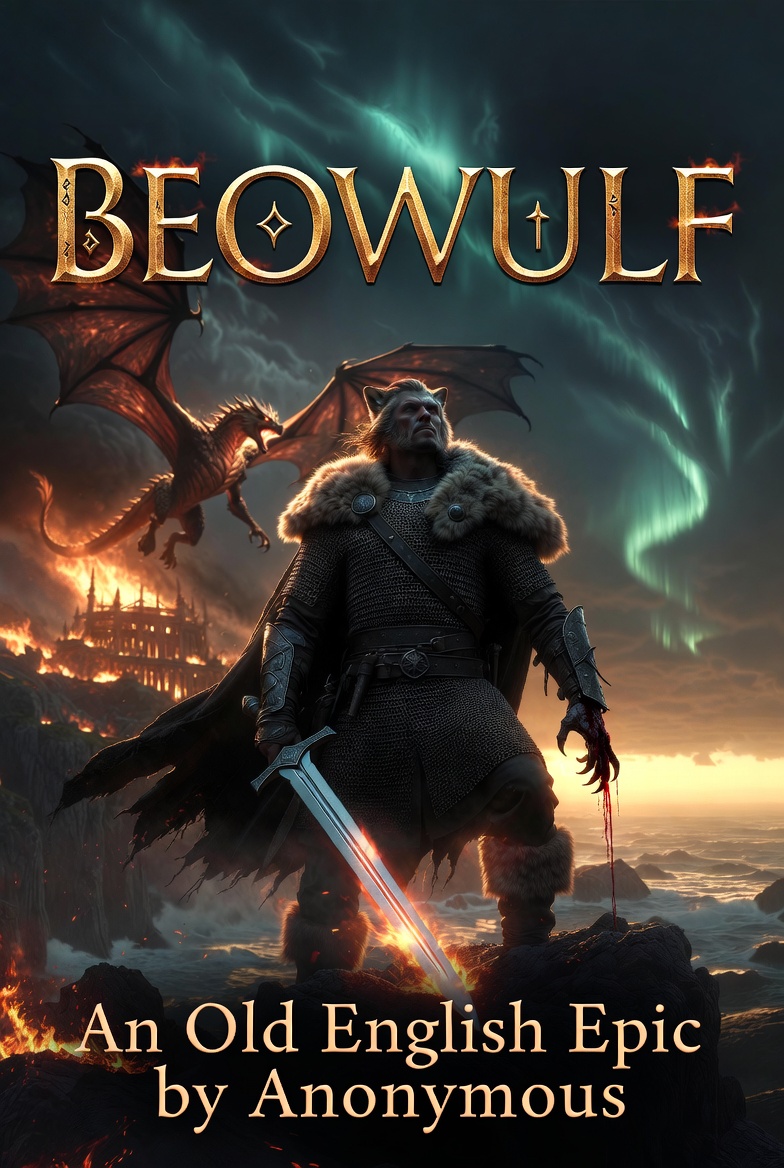
Beowulf cover
Sample Playbook — Historical Edition
Sample Playbook — Modern 2026 Edition

Beowulf

by Anonymous

Old English Epic Poetry / Heroic Dark Fantasy · 1000

📜
Historical Edition. This shows what a marketing plan for Beowulf might have looked like if Anonymous had access to a structured marketing framework in 1000. Every recommendation is grounded in the real publishing and distribution channels of the era. Use the toggle above to see the modern 2026 version.
🚀
Modern 2026 Edition. This is what a publisher's marketing plan for Beowulf would look like if it were released as a brand-new book today — using Amazon, BookTok, Substack, and the full toolkit of modern book marketing. This is exactly what your own playbook will look like.

Target Reader

The ideal audience in 1000 is the warrior aristocracy of Anglo-Saxon England: thanes, ealdormen, and their household warriors, gathered in the mead-hall after the evening meal. These are men of fighting age with a living memory of Viking raids and a deep investment in the heroic code of loyalty, gift-giving, and fame beyond death. They are largely non-literate in the sense of reading manuscripts themselves, but they are sophisticated listeners trained from childhood to hear and retain complex oral verse. Secondary audiences include the clergy — abbots, monks, and educated priests — who would have encountered the poem through the monasteries and who would be drawn to its Christian theological layering. Women of the aristocratic household are present in the hall as cup-bearers and witnesses, though they are audience, not patron. The patron who matters — the person whose approval converts a single performance into a recurring engagement — is the lord of the hall himself.

Optimized Book Description

Copy and paste this into your KDP dashboard under Book Description.

The 1000 equivalent of an Amazon product page — in this era, the equivalent is the scop's spoken introduction before performance, or a written notice circulated to monastic scriptoria and noble patrons to generate advance interest and secure a performance invitation.

HWÆT! Hear now the tale of Beowulf, thane of the Geats, mightiest of warriors, who crossed the whale-road to the hall of Hrothgar, King of the Danes, when all other men had failed. For twelve winters the monster Grendel had held the great mead-hall Heorot in terror — a creature of darkness, a descendant of Cain, who dragged men from their sleep and devoured them before the dawn. No iron could bite him. No lord's war-band could stand against him. And yet Beowulf came.

This is not a tale of easy victory. It is the story of three battles fought across a lifetime — against Grendel in the rushes of Heorot, against Grendel's dam in the cold mere below the earth, and against the fire-dragon in the final years of a king's long reign. It is a poem that knows what glory costs and does not flinch from the price. Beowulf will kill his monsters and receive his gold-rings, and the poem will tell you plainly that the hall will burn and the people will scatter when the great warrior is gone.

Composed in the alliterative tradition of the Angles and Saxons, set in the remembered world of the Geats and Scyldings of the northern seas, Beowulf is the finest heroic poem in the English tongue — a poem for kings who wish to be remembered, for thanes who wish to understand what loyalty demands, and for all who sit in the firelight and know that the darkness is not far beyond the door.

This poem is available for performance in your hall. Speak to the scop who carries this notice for terms of engagement.

Backend Keywords

Enter each phrase in its own keyword field in KDP (up to 7 fields).

#Phrase
1 heroic lay of the Geats
2 monster-slaying verse
3 alliterative heroic poem
4 gyd of kings and thanes
5 Germanic legend of the north
6 hall-poem of battle and lordship
7 Christian epic of Providence and wyrd

These are the descriptive phrases that abbots, ealdormen, and educated patrons of 1000 would have used to categorise and recommend oral poetry of this type — the equivalent of Amazon search keywords. In this era, 'discovery' happened through reputation and description: a lord's steward or a monastery's librarian would describe a poem to a patron using phrases like these. The scop should be prepared to use all of them when introducing the work, matching the language to the audience — 'heroic lay' and 'hall-poem' for secular lords, 'Christian epic' and 'Providence' for monastic hosts.

Price Recommendation

For a single hall performance: negotiate a gift of gold or silver equivalent to the worth of a fine weapon — a decorated sword-hilt or armband — plus lodging, food, and a place in the lord's retinue for the duration of the visit. For a monastic scriptorium copy: offer the first written transcript in exchange for the monastery's patronage, their network of introductions, and the right to have their name recorded as the poem's preservers.
In 1000, the scop does not set a fixed price. Compensation operates through the gift economy of the hall: a lord who is pleased gives generously, and the scop's reputation is built on the quality of the gifts received as much as on the quality of the verse. However, the scop can and should establish a floor by reputation — if it is known that the King of Mercia gave a gold arm-ring for a single performance, a lesser thane cannot offer less without shame. Strategy: perform first for the highest-status lord accessible, accept whatever is given graciously, and allow the news of that gift to travel. Separately, approach the monastery at Winchester or Canterbury about producing a written copy. The monastic copy is not a revenue stream — it is insurance against the poem's loss and a mark of its seriousness.

KDP Select / Kindle Unlimited

Do not serialize. Perform the poem complete, in a single evening's recitation, with the option to return the following night for the second and third movements. The complete performance is the product.
Serialization — the medieval equivalent of which would be performing only a section of the poem each visit and leaving the conclusion unfinished — carries genuine risks in this context. Unlike a 19th-century journal reader who will wait weeks for the next installment with growing anticipation, a mead-hall audience that receives an incomplete poem may simply invite a different scop next season. The poem's emotional arc — from Beowulf's youthful triumph to his aged sacrifice — depends on the listener experiencing the full movement in close succession. The single complete performance also serves the poet's reputation better: a lord who has heard all of Beowulf in one night has received something whole and magnificent. The practical compromise is a two-night structure: Night One covers the Grendel and Grendel's dam sequences; Night Two covers the dragon fight and the lament. This creates a natural pause for feasting and discussion while maintaining narrative momentum and guaranteeing the second night's invitation.
Royal and noble mead-hall performance circuit Needs setup
The mead-hall was simultaneously the court, the theater, and the social media platform of Anglo-Saxon England. After the evening meal, with the lord and his thanes gathered around the fire and the mead-cup circulating, the scop would perform. Attendance was mandatory for the household; the performance was the evening's primary entertainment and the primary vehicle for cultural transmission. A successful performance at a great hall — Æthelred II's court at Winchester, or the hall of a leading ealdorman — would be discussed by travellers and merchants who had attended, carrying the poem's reputation across considerable distances.
Why it matters: There is no other primary channel for oral epic in 1000. This is where the target audience — the warrior aristocracy — assembles in the right frame of mind to receive exactly this kind of material. The hall is the only venue where the poem can be experienced as it was designed to be experienced: in firelight, with the sound of the lyre, surrounded by men who have fought and lost companions and understand what it means to face something in the dark.
Action: Begin by securing a performance at the hall of a mid-ranking ealdorman through an existing patron connection — do not attempt to reach Æthelred II's court directly without an introduction. Prepare the poem's opening sequence, from 'Hwæt!' through Hrothgar's establishment of Heorot, as a standalone demonstration that can be performed in under twenty minutes at a preliminary feast. If the reception is strong, negotiate a return invitation for the full poem. After each performance, obtain from the lord a written letter of commendation — ideally sealed — that can be shown to the next lord as evidence of the poem's reception. Build the circuit from provincial halls toward the royal court over two to three seasons.
⏱ One full performance season (late autumn through early spring, when travel is reduced and hall-life intensifies) to establish the poem in three to five provincial halls; a second season to reach the royal court or a major episcopal household.
Monastic scriptorium — written copy and ecclesiastical patronage Needs setup
In 1000, monasteries were the only institutions capable of producing, copying, and preserving written texts. The great English scriptoria — at Winchester, Canterbury (both Christ Church and St Augustine's), Ely, and Peterborough — employed trained monks who copied manuscripts under the direction of the scriptorium master. A monastery that took an interest in a poem could preserve it, copy it for other houses, and recommend it to the bishops and abbots who travelled between institutions. The Nowell Codex itself — the manuscript in which Beowulf actually survives — was almost certainly produced in a monastic context. Ecclesiastical patrons also provided the most reliable long-term income outside the hall circuit.
Why it matters: The hall circuit guarantees audiences now; the monastery guarantees the poem exists in a hundred years. But monasteries are also active cultural intermediaries in 1000: abbots correspond with one another, bishops travel between houses and courts, and a monk who admires the poem's Christian theological content can become an enthusiastic advocate at every ecclesiastical gathering he attends. The poem's treatment of Grendel as a descendant of Cain, its references to God's Providence, and its typological resonances with Christian themes of sacrifice are genuine selling points to a monastic audience — emphasise these in the approach letter.
Action: Approach the scriptorium at Winchester Cathedral Priory first — Winchester is the cultural and administrative centre of late Anglo-Saxon England, and the New Minster and Old Minster communities have both the literacy and the resources to produce a fair copy. Prepare a written precis of the poem's Christian themes — its treatment of Grendel as Cain's kin, its meditation on the transience of earthly glory, its implicit argument that only God's Providence outlasts the mead-hall — and present this to the scriptorium master or the abbot's secretary. Offer to dictate the full poem to a trained scribe over several sessions. Request in return that the monastery circulate news of the poem among their episcopal and abbatial correspondents. Follow with an approach to Christ Church Canterbury, which has direct connections to the Archbishop and the widest correspondence network in England.
⏱ Allow four to six weeks for the initial dictation sessions; the scriptorium will require additional weeks to produce a clean copy. The network effects of monastic recommendation will build over one to two years.
Episcopal and royal court gatherings — feast-day performances Needs setup
Beyond the regular hall circuit, the great feast days of the Christian calendar — Christmas, Easter, Pentecost — drew lords, bishops, and their households together in extended gatherings that lasted multiple days. These were the highest-prestige performance opportunities available: the Christmas court of King Æthelred II at Winchester or Gloucester would assemble the leading ealdormen of England alongside the Archbishop of Canterbury and the leading abbots. Entertainment at these gatherings was a matter of royal prestige, and a scop who performed well at a royal feast-day court could expect to be retained for subsequent seasons.
Why it matters: Beowulf's scale — it is designed for multi-evening performance — makes it ideally suited to the extended feast-day gathering, which lasts three to twelve days and requires sustained evening entertainment. Its dual appeal to secular and ecclesiastical audiences is equally important: the Christmas court of an Anglo-Saxon king includes both thanes hungry for battle-poetry and bishops interested in its Christian dimensions. No other format offers access to both constituencies simultaneously.
Action: Target the royal Christmas court. The route to an invitation is through an ealdorman who attends regularly and who has already heard a successful hall performance of the poem. After performing for Ealdorman Ælfric of Hampshire (or whichever regional lord is most accessible), explicitly request that he recommend the poem to the king's household steward for the Christmas season. Prepare a shortened festival version — the Grendel sequence alone — that can serve as a single evening's entertainment at court, with the full poem offered as a return engagement.
⏱ One to two performance seasons to build the ealdorman relationships necessary to secure a royal court introduction.
Monastic reading — lectio divina and refectory recitation Needs setup
In Anglo-Saxon monasteries, reading aloud was a communal practice. During meals in the refectory, a monk would read from an improving text while the community ate in silence; the Benedictine Rule also prescribed periods of sacred reading (lectio divina) as part of the daily office. While the Rule primarily called for Scripture and patristic commentary, abbots with humanistic inclinations — and there were several in late Anglo-Saxon England — permitted vernacular religious or edifying poetry. A poem like Beowulf, with its explicit Christian framing, could plausibly be read in this context.
Why it matters: Refectory and lectio readings represent access to a literate, educated audience that could produce written commentary, copy the text, and recommend it through the ecclesiastical correspondence network. A monk who heard Beowulf read at Peterborough might mention it in a letter to a brother house at Ramsey; an abbot who found it theologically interesting might cite it in a sermon or a letter to the Archbishop. This is word-of-mouth among the most articulate and well-connected community in England.
Action: After securing the Winchester scriptorium copy, write to Abbot Ælfwig at the New Minster Winchester and to the Abbot of Peterborough — both houses with strong literary cultures in this period — proposing that a monk read selected passages (specifically the Grendel sequence and the final lament) during a feast-day refectory meal. Provide the written text and a brief letter explaining the poem's Christian themes and its use of the Cain and Abel tradition. Do not propose a secular hall performance to a monastic audience — frame it entirely as a devotional and edifying text.
⏱ Two to three months to arrange, following the completion of the Winchester manuscript copy.

Skip for now

Scandinavian and continental distribution: While Beowulf is set among the Geats and Danes and draws on shared Germanic legendary material, the immediate priority is establishing the poem's reputation within Anglo-Saxon England, where the performance infrastructure and potential patronage exist. Scandinavian skalds have their own distinct tradition of court poetry and would not straightforwardly adopt a poem composed in Old English alliterative verse. Continental monasteries such as Fulda or St Gallen could theoretically receive a Latin summary, but the resources required to translate the poem, the distance involved in establishing continental relationships, and the uncertainty of reception make this a distraction in the first two seasons. Return to this question once the poem has a secure English patron, a written manuscript copy, and two or three seasons of successful hall performances behind it.

Pre-Launch

Four weeks before the first major hall performance

  • Secure a patron introduction: identify the most senior ealdorman accessible through an existing connection — ideally someone with court ties who attends the royal Christmas gathering — and request an audience to describe the poem and propose a performance date. Bring the written precis of the poem's Christian themes and heroic content. This meeting is the equivalent of pitching a publisher; the ealdorman's agreement to host a performance is the green light for the launch.
  • Commission a short written notice — a single folio — describing the poem's subject, its origins in the ancient legends of the Geats and Danes, and its Christian moral framework. Have this written in a clear insular minuscule hand and duplicated by a monk-scribe at a friendly local monastery. Distribute copies to the households of three neighbouring lords and to the local minster church, so that word of the upcoming performance reaches potential secondary audiences before the night itself.
  • Prepare and rehearse the poem's opening movement — from 'Hwæt!' through the establishment of Heorot and Grendel's first attack — as a standalone demonstration piece lasting approximately thirty minutes. This is the hook that will determine whether any given lord invites a full performance. It must be flawless: the alliterative metre precise, the kennings vivid, the pacing calibrated to the hall's acoustics and the lyre's resonance.
  • Make contact with the Winchester scriptorium: write to the scriptorium master requesting a meeting to discuss producing a written copy. Frame this as an act of cultural preservation — 'lest this poem perish as so many have perished' — and offer to dictate the full text at the monastery's convenience. The monastic relationship should be established before the hall circuit begins, so that the first reviews from educated ecclesiastical readers can begin circulating before the end of the first performance season.
  • Identify which thanes and household warriors from the target ealdorman's hall are most likely to become advocates. Men who have lost companions in battle, who have particular devotion to the ideals of loyalty and comitatus, who are known for their interest in verse — these are the people whose word-of-mouth will carry furthest after the performance. Seat them well, make eye contact during the Wiglaf loyalty sequence, and speak to them individually at the mead-cup afterward.

Launch Week

The performance night and the fortnight following

  • Open the performance with the full force of 'Hwæt!' — delivered standing, with the lyre silent for a half-beat before the first alliterative line, so that the hall's conversation stops completely. The first thirty seconds determine everything. If the room is not silent by the third line, the evening is already compromised. Rehearse the opening until it is automatic under any conditions.
  • After the performance, approach the lord directly before he retires and request a private word. Ask not for payment immediately — ask for his opinion of the poem, which invites him to invest emotionally in its quality. His praise, given privately, can then be referenced publicly: 'Ealdorman [Name] was pleased to say, in my hearing, that he had not known a finer poem in the hall.' This is the equivalent of a blurb, and it must be obtained at source before the evening's impressions fade.
  • In the days following the performance, call on any monks, priests, or educated clerks who attended or who have heard the report of the performance. Offer them the written folio notice and, if the Winchester copy is ready, a reading of selected passages. These are the people who will write letters — to abbots, to bishops, to other educated households — that will carry the poem's reputation further than any thane's word-of-mouth.
  • Send the written notice, endorsed with the ealdorman's name and commendation, to two or three neighbouring lords with a brief covering letter proposing a performance at their convenience. Frame the letter around the ealdorman's reception: a lord does not want to be seen to have missed something his peer enjoyed. This is the medieval equivalent of a launch-week sales push.
  • Begin the Winchester scriptorium dictation sessions if not already started. Having a written copy in production during the launch window means that any bishop or abbot who hears of the poem through the ecclesiastical network has a concrete object — a manuscript — to request and receive.

Post-Launch

Months two through six after the first major performance

  • Work the hall circuit systematically through the winter months, performing for each of the ealdormen and senior thanes who received the notice. Adjust the poem's emphasis for each audience: for a lord with recent battle experience, dwell on the comitatus passages and Wiglaf's loyalty; for a household with strong ecclesiastical connections, foreground the Cain typology and the poem's meditation on Providence. The poem is the same; the emphasis is not.
  • By month three, the Winchester manuscript should be complete. Request that the scriptorium send a copy — or at minimum a detailed letter of commendation — to Christ Church Canterbury and to the Abbot of Peterborough, both of whom have the networks and the literary culture to amplify the poem's reputation among the educated clergy. A letter from the Archbishop of Canterbury's household acknowledging the poem's Christian merit would be transformative.
  • In month four or five, target the royal court. Use every accumulated commendation — ealdormen's endorsements, monastic approbations, the Winchester copy — to make the case to the king's household steward that Beowulf is the appropriate poem for the royal Christmas court. The pitch should be made through an intermediary, ideally the most senior ealdorman who has already hosted a performance and who attends the royal Christmas gathering regularly.

Review Strategy

In 1000, the critics are the clergy. The literate community capable of producing written opinion — abbots, bishops, educated monks, royal chaplains — is the review apparatus, and their correspondence network is the distribution system for those reviews. The priority targets are, in order: (1) the Winchester scriptorium master and the Abbot of the New Minster, whose endorsement will circulate through the entire Benedictine reform network established by Æthelwold; (2) the household of Archbishop Ælfric of Canterbury, whose written commendation would carry authority across the whole English church; (3) the royal chaplains at Æthelred II's court, who are both educated enough to appreciate the poem's Christian complexity and well-positioned to recommend it to the king. Do not approach these figures cold. Each approach should come through an existing relationship — a letter of introduction from a previous patron, or a personal connection through a monastery where the scop has already performed. The advance copy in this context is a personal recitation or reading, not a physical text. Offer to perform or read selected passages privately before the formal public performance, framing this as an act of respect for the cleric's learning. The covering letter — delivered by a trusted messenger — should be brief, specific, and honest: describe the poem's subject, its Christian framework, and name one senior figure who has already expressed approval. Request the cleric's opinion, not their endorsement. Opinion can become endorsement; a request for endorsement from a stranger will be ignored.

Primary Channel: The mead-hall performance circuit and the word-of-mouth network of the thane class

Anglo-Saxon thanes and ealdormen travelled constantly — between their own estates, to the royal court for the three great seasonal assemblies, to the shire courts, and to neighbouring lords' halls for feast-day gatherings. Each of these journeys was an opportunity to carry news of a poem heard and enjoyed. A thane who heard Beowulf at his lord's Christmas feast would describe it to the lord of the next hall he visited; a royal household warrior who attended a court performance would speak of it at the next military muster. This is the primary word-of-mouth network of 1000, and it operates through the same social infrastructure — loyalty, gift-giving, shared culture — that the poem itself describes.

Why this platform for your book: Heroic epic is the genre of the warrior aristocracy, and the warrior aristocracy is the travelling class. Beowulf's content — battle, loyalty, the proper conduct of a lord and his thanes — is directly relevant to the daily concerns and self-image of the people most likely to carry its reputation. A love lyric or a saint's life would not travel this network as effectively; Beowulf, as a poem about what it means to be the kind of man these men aspire to be, has built-in advocacy among every thane who hears it.

What to post

The 'Hwæt!' opening as the standard attention-grab for any audience — rehearse it as a standalone hook that can silence a room in any context, not only a formal performance.
The Grendel attack sequence — the monster crossing the dark moor, the hall in silence, the doors breaking — as the primary demonstration passage for new audiences. It is the poem's most visceral and immediately compelling episode and works without the surrounding context.
The Wiglaf loyalty speech, in which the young warrior stands with Beowulf against the dragon while all other thanes flee — this passage resonates powerfully with the comitatus ethic and tends to produce the strongest emotional response from warrior audiences. Use it as the closing passage at preliminary performances.
The Hrothgar sermon on the dangers of pride and the transience of earthly power — for ecclesiastical audiences and for lords who wish to see the poem's moral and Christian dimensions. This passage is the strongest argument that Beowulf is not merely entertainment but instruction.
The final lament over Beowulf's body — 'He was of all kings the mildest of men and the most gentle, kindest to his people and most eager for praise' — as the poem's emotional resolution and the image that will stay with listeners longest. This is the passage that converts an audience from impressed to devoted.

Time commitment: Three to five performances per month during the winter season (October through March); one to two per month in summer for relationship maintenance. Each formal performance requires a full evening — four to six hours including the feast — plus one to two days of travel on either side. Budget for one full working season of roughly six months per year dedicated primarily to this circuit.

Secondary Channel: Ecclesiastical correspondence and monastic network

Anglo-Saxon monasteries maintained active written correspondence with one another and with the royal court. Abbots wrote to abbots; bishops corresponded with the Archbishop; the Benedictine reform network established by Dunstan, Æthelwold, and Oswald in the mid-tenth century had created a set of closely connected houses — Winchester, Abingdon, Ramsey, Ely, Peterborough — that shared texts, personnel, and influence. A letter of commendation circulating in this network reached every educated household in England within a single year.

The monastic network is the secondary channel because access to it requires first producing the manuscript copy — which is itself a months-long project — and because the ecclesiastical audience, while influential, is not the primary consumer of heroic epic in the way that the warrior aristocracy is. However, it is the channel through which the poem will achieve permanence and long-range reputation. The thane's word-of-mouth builds the poem's fame in the present; the monk's letter preserves and extends it into the future.

Getting started: Complete the Winchester manuscript dictation and request that the scriptorium master write a brief letter to the Abbot of Ramsey and the Abbot of Peterborough describing the poem and its reception. These two houses have the widest correspondence networks in the Danelaw and Midlands respectively.
Write directly to one senior monastic scholar whose intellectual interests align with the poem — the most learned monk at Abingdon, for instance, where the intellectual culture of the Æthelwold reform is strongest — offering to provide a personal reading of the poem's Christian passages and requesting his written opinion. A single letter of scholarly commendation from a respected monastic figure will travel the entire network.
Ensure the poem's manuscript copy includes a brief preface — composed by the scop or by a friendly monk — explaining the poem's Christian framework, its use of the Cain tradition, and its thematic concern with Providence and the transience of earthly glory. This preface is the poem's pitch document within the monastic network and should be written with that audience in mind.


Your Email List

The period equivalent of an email list is a register of named patrons and interested lords maintained by the scop — a mental or written list of every lord, churchman, and senior household member who has heard the poem and responded well, plus those who have expressed interest through a third party. In a literate context, this would take the form of a roll of correspondents to whom a new written copy or a notice of upcoming performances could be sent by messenger. In the primarily oral context of 1000, it is maintained in memory and activated through personal messenger contact.

How to start

Keep a written roll — maintained with the help of a literate monastic ally — of every lord, ealdorman, and churchman who has hosted or attended a performance, with a note of their response and their connections. Each autumn, before the performance season begins, send a brief messenger to the five most senior names on the roll confirming the scop's availability and noting any new patrons or commendations acquired since the last contact. Ask, through the messenger, whether they know of any lord who has expressed interest and not yet been visited.

Reader magnet idea: Offer to every lord who has hosted a full performance a written scroll containing the Wiglaf loyalty passage and the final lament — the poem's two most emotionally powerful sequences — copied in a clear hand on good vellum. This is a keepsake that the lord can display or have read to his household independently of the scop's presence. It keeps the poem alive in the hall between performances and ensures that visitors to the lord's estate encounter the poem in physical form. Include at the bottom of the scroll the scop's name and a note that the full poem is available for performance upon invitation.

Reader Communities

The Winchester New Minster community under the Benedictine Reform monastic literary community
The New Minster at Winchester is the intellectual heart of late Anglo-Saxon England in 1000. The Benedictine reform, carried out by Æthelwold and his disciples in the previous generation, had created a community of highly educated monks with a strong interest in both Christian learning and vernacular culture. The Winchester scriptorium was producing some of the finest manuscripts in England, and the community's abbots had direct access to the royal court and the Archbishop. A warm reception at Winchester would validate the poem for every educated Englishman who heard of it.
How to engage: Approach through a letter to the scriptorium master, as described above. Once the manuscript is in production, request permission to attend a chapter meeting or a feast-day gathering and present the poem's Christian themes in a brief spoken address — not a full performance, but an intellectual discussion of the poem's engagement with the Cain tradition and providential theology. This positions the scop as a learned colleague rather than a hired entertainer and is far more likely to generate enthusiastic internal advocacy.
The royal court at the three seasonal assemblies (Christmas, Easter, Pentecost) aristocratic court gathering
Three times per year, King Æthelred II assembled the leading ealdormen, bishops, and thanes of England at the royal court. These gatherings — particularly the Christmas court, which lasted the longest and had the most extended entertainment — were attended by the entire political and cultural elite of Anglo-Saxon England simultaneously. A successful performance at any one of these gatherings would give Beowulf access to the widest possible aristocratic audience in a single event, and the king's visible enjoyment would function as the most powerful endorsement available.
How to engage: Do not attempt direct access. The route is through an ealdorman who attends the Christmas court and who has already hosted a successful hall performance. After performing for Ealdorman Æthelweard of the Western Provinces — who is known to have had literary interests, as he was himself a Latinate author — request specifically that he recommend the poem to the king's household steward for the Christmas entertainment program. Be prepared to perform a single-evening extract — the Grendel sequence — rather than the full poem, and to use that as the springboard for a longer royal engagement the following season.

Publication Announcement

Send to your list or personal contacts on launch day.

To: Your email list
Subject: Of the poem Beowulf, now available for performance: commendation and notice to lords and churchmen of good understanding
To the honoured household of [LORD'S NAME], greeting in God's name and in the fellowship of good learning.

I write to bring to your attention a poem of great age and excellence, composed in the alliterative manner of our forebears among the Angles and Saxons, which I have had the honour to perform before Ealdorman [PATRON'S NAME], who was pleased to receive it with much generosity.

The poem is called Beowulf. It tells of the warrior Beowulf of the Geats, who crossed the sea to aid Hrothgar, King of the Danes, when the monster Grendel had held the mead-hall Heorot in terror for twelve winters. It tells of three great battles fought across a lifetime, and of the death of a king who gave everything in the service of his people. It is a poem that speaks of what it means to be a lord, a thane, and a Christian man in a world where the darkness presses always at the door.

I offer to perform this poem in your hall at any feast or gathering that suits your pleasure. The poem is of sufficient length for a full evening's entertainment, or may be divided across two nights for a longer gathering.

A written copy of selected passages may be provided upon request to any lord or churchman who wishes to consider the poem before extending an invitation.

I remain your servant in verse and in the old tongue of the Angles.

[SCOP'S NAME or 'The Scop who carries this letter']

Social Posts

ARC Request Email

Send to bloggers and reviewers before your release date. Replace [REVIEWER_NAME] and [BOOK_LINK].

To: [Reviewer Name]
Subject: A request for your learned opinion: concerning the poem Beowulf, now in performance in the halls of England
To the Reverend and Learned [CRITIC_NAME], Greeting in Christ and in the fellowship of letters.

Your reputation for sound judgment in matters of both Christian learning and the vernacular poetry of the English has long been known to me, and it is on account of that reputation that I write.

I have composed — or rather, I carry and perform — a poem of considerable length and, I venture to hope, of some merit, which treats of the Geatish warrior Beowulf and his three great contests against the enemies of God and man. The poem works within the alliterative tradition of our forebears but engages at length with the theological questions of Providence, the sin of pride, and the proper duty of a Christian king — questions which I understand to be of particular interest to your scholarship.

I should be greatly honoured if you would hear a reading of selected passages — the Grendel sequence and the final lament are perhaps the most characteristic — and offer your opinion frankly. I seek no formal commendation; your honest judgment is worth more than any endorsement given without examination.

A written copy of the passages I propose to read may be sent in advance of our meeting if that would assist your consideration. I am at your service at whatever time and place suits your convenience.

Your servant in verse,
[SCOP'S NAME]

Author Bios

Short (Amazon, Goodreads, BookBub)

The scop who carries the poem Beowulf is a poet in the alliterative tradition of the English, trained in the halls of the warrior aristocracy and learned in the ancient legends of the Geats and Danes. The poem has been performed before Ealdorman [PATRON'S NAME] and received with great honour. A written copy is held at the New Minster Winchester.

Long (Website, press kit)

The scop who bears the poem Beowulf stands in the oldest tradition of the English hall-poet: trained from youth in the alliterative verse-forms, the kenning-craft, and the art of holding a room in silence from the first word to the last. The poem itself draws on legends of the ancient Geats and Danes that were old when the Angles first crossed the North Sea, but in the scop's performance they live again in full — Beowulf against Grendel, Beowulf in the mere, Beowulf against the dragon in his last hour. The poem has been shaped by the same Christian learning that flourishes in the great monasteries of England, and it speaks as fully to the monk's understanding of Providence as to the thane's understanding of loyalty and courage. The poem has been received with honour at the hall of Ealdorman [PATRON'S NAME], and a written copy now rests at the scriptorium of Winchester. The scop is available for performance at any great hall or feast-day gathering, and for reading before monastic communities, by arrangement through messenger.
This is the 1000 equivalent of Amazon Ads — in this era, paid promotion means commissioning written notices for distribution through monastic messenger networks and investing in a professional hand to copy the distribution folio. The primary paid channel for Beowulf is not a notice in a journal (no journals exist) but a targeted messenger campaign: commissioning a monk-scribe to produce five to ten copies of the announcement folio and paying for their delivery by trusted messenger to the households of specific senior ealdormen and abbots. The single most important thing to get right is the endorsement: a paid notice without a named senior patron behind it carries no weight. Secure Ealdorman [PATRON'S NAME]'s permission to cite his commendation in every notice before spending a single coin on distribution.
ℹ Readiness check: Beowulf is not yet ready for broad paid distribution. The poem requires at minimum two successful hall performances with named senior patrons before a general notice campaign is worthwhile — otherwise the notice circulates into a network where no one has yet heard of the poem, and an unknown scop's self-promotion carries no credibility in a culture where reputation is everything. The sequence is: perform first, secure commendations, then pay for distribution of those commendations. At present, the priority is the Winchester scriptorium relationship and the first ealdorman performance. Return to paid notice distribution in month three or four of the launch plan, once two endorsements are in hand.

Ad Headlines

Use in Sponsored Products "Custom text" field. Test both.

Headline 1
BEOWULF — The Hall-Poem of the Age
Direct, confident, uses the genre category ('hall-poem') that the target audience will immediately understand. 'Of the Age' makes a bold claim that invites the reader to form a judgment — and a lord who has not heard the poem will not want to be the only one who has not.
Headline 2
He Fought the Monster. He Saved the Hall.
A concrete, action-based summary that speaks directly to the warrior aristocracy's self-image and the hall's symbolic importance. Tests whether the narrative hook — rather than the genre claim — drives more performance invitations. Useful as an alternative when approaching lords whose households have recently faced real threats, where the monster-slaying premise resonates viscerally.

Keyword List

The targeting strategy for paid notices in 1000 is demographic, not algorithmic: the notices should be delivered specifically to the households of senior ealdormen who are known to host extended feast-day gatherings (Christmas and Easter courts require multi-evening entertainment), to the abbots of monasteries with known literary interests, and to the royal chaplains who advise the king on his court's entertainment. Do not distribute broadly — a targeted delivery of ten notices to the right ten households is worth more than a hundred notices sent at random. The ecclesiastical network should receive notices framed around the Christian theological content; the secular aristocratic network should receive notices framed around the heroic and martial content.

Competitor Titles Genre Terms Reader Behavior
The Battle of Maldon (991 AD) — the most recently composed major heroic poem in English, celebrating the thanes who died against the Vikings at Maldon; readers of Maldon are the precise target audience for Beowulf heroic lay Attendance at seasonal royal and ealdorman feast-day courts (Christmas, Easter, Pentecost)
The Wanderer — the elegiac Old English poem of exile and loss, circulating in manuscript in the same monastic networks that will encounter Beowulf alliterative verse Patronage of resident and itinerant scops at household level
The Seafarer — the Old English lyric of journey and spiritual longing, another manuscript-circulating poem with overlapping monastic and educated secular readership gyd of battle and lordship Reading or hearing Old English elegies and shorter heroic verse in monastic settings
Judith — the Old English heroic poem on the biblical Judith, preserved in the Nowell Codex alongside Beowulf; its readers would find Beowulf the larger and more ambitious companion piece hall-poem of the Geats Discussion of heroic legend and battle verse at the mead-cup following formal evening meals
Norse skaldic verse circulating in Danelaw courts — the competitive product for the Anglo-Scandinavian aristocracy of the north and east Midlands, who have an appetite for heroic poetry but currently consume it in Old Norse Christian epic of wyrd and Providence Correspondence between monastic houses sharing news of notable vernacular and Latin texts

Bid & Budget

Starting bid
Commission a trained monk-scribe to produce eight copies of the announcement folio at a rate of one silver penny per copy — a total outlay of eight pence — plus messenger hire at two to four pence per delivery to distant households. Total initial distribution budget: approximately one shilling (twelve pence) for eight targeted deliveries to senior ealdormen and abbots.
per click
Daily budget
Budget one to two shillings per performance season for notice production and messenger delivery. This is a very small outlay relative to the potential return of a single successful lord's commission, which might yield a gift worth several times that amount. Do not increase the budget until the first season's performance commissions have been evaluated — if the notices are working, the bookings will come.
to start
Evaluate the paid notice campaign after the first eight deliveries by counting the number of performance invitations received from households that received a notice versus those that did not, and by asking new patrons directly how they heard of the poem. If more than two invitations come from notice-recipients in the first season, the campaign is working and the budget can be expanded to fifteen to twenty targeted deliveries. If fewer than two invitations result, the problem is almost certainly the absence of strong named endorsements — pause spending and focus on securing a higher-status patron commendation before resuming distribution. Watch also for the monastic signal: if an abbot who received a notice writes back to express interest or requests a reading, this is the most valuable response possible and should be followed up personally and immediately, regardless of the financial value of the direct engagement.

This Week

  • Identify the single most senior ealdorman accessible through an existing connection — ideally one with court ties and a household known for its hall culture — and send a messenger today requesting a meeting to propose a performance. Do not wait for the written materials to be ready; the conversation that secures the first performance date is the entire critical path, and everything else follows from it.
  • Draft the announcement folio — the single-page written notice of the poem, its subject, its Christian themes, and the terms of performance engagement — and identify a literate monastic ally who can produce four to six copies in a clean hand. This is the single most useful physical asset for the launch and can be produced within a week with minimal resources.
  • Prepare and rehearse the thirty-minute demonstration sequence — from 'Hwæt!' through Grendel's first attack on Heorot — until it can be delivered under any conditions without hesitation. This is the product sample that will determine whether any lord extends a full performance invitation, and it must be better than anything the target lord's household has heard before.

This Month

  • Secure the first formal hall performance with a named senior ealdorman and perform the complete poem across one or two evenings. Obtain, before leaving the hall, the lord's verbal commendation and permission to cite his name and generosity in future notices and letters.
  • Make the first contact with the Winchester scriptorium: write to the scriptorium master describing the poem and requesting a meeting to discuss producing a written copy. The goal this month is not to complete the manuscript but to begin the relationship and schedule the dictation sessions.
  • Distribute the announcement folio to five targeted households — chosen for seniority, geographic spread, and likelihood of hosting extended feast-day gatherings — with a brief covering letter citing the first ealdorman performance and its reception.

Next Six Months

  • Complete the Winchester manuscript dictation and request that the scriptorium master write introductory letters to the Abbots of Peterborough and Ramsey, initiating the monastic recommendation network. By month four, the goal is to have the poem known by name in at least three major monastic houses outside Winchester.
  • Perform the poem in at least five distinct halls across England, building geographically toward the royal court. By month five, use the accumulated ealdorman commendations to request an introduction to the king's household steward for the following Christmas court.
  • Establish the patron scroll gift: commission a clean vellum copy of the Wiglaf loyalty passage and the final lament — the poem's two most emotionally powerful sequences — and present one to each lord who has hosted a full performance. This keepsake keeps the poem present in each hall between visits and generates ongoing word-of-mouth with the lord's visitors.

Target Reader

Readers aged 18–40 who devour grimdark fantasy and Norse/Viking-adjacent fiction, active on BookTok and Goodreads, who follow authors like Joe Abercrombie, Madeline Miller, and Neil Gaiman, and who have driven the 2020s surge in mythological retellings and dark epic fantasy. They finish Bernard Cornwell's Saxon Stories and immediately look for something with more existential weight. They are not looking for cozy fantasy — they want blood, fate, and a hero who knows he is going to lose eventually.

Optimized Book Description

Copy and paste this into your KDP dashboard under Book Description.

The monster has been feeding for twelve years.

Every night, it walks out of the fenlands and into the great mead-hall of the Danes. Every night, it kills. And every morning, King Hrothgar sits among the ruins of his feasting-hall and wonders if any warrior on earth is brave — or mad — enough to face what waits in the dark.

Then Beowulf arrives.

A Geatish thane of terrifying strength and absolute conviction, he has crossed the sea for one reason: to kill Grendel. Not for gold. Not for a king's command. Because there are monsters in the world, and someone has to stand between them and the firelight.

What follows is three confrontations that will define a man, a kingdom, and an age.

First, Grendel — the shadow-stalker, the hall-destroyer, the creature that cannot be touched by sword or shield. Then something worse: the thing that lives beneath the mere, older and colder and driven by a grief that makes it more terrifying than any simple predator. And finally, decades later, a dragon — and a choice that a king must make when his people's survival costs him everything.

Beowulf is the foundational dark fantasy epic: the poem that gave the genre its DNA. Brutal, elegiac, and relentlessly gripping, it is the story of a man who spends his entire life walking toward the fight that will kill him — and calls that a life well lived.

For fans of Madeline Miller, Joe Abercrombie, and Bernard Cornwell. For readers who want their heroes flawed by fate, not character. For anyone who has ever felt the cold edge of a great story that refuses to flinch.

The monsters are real. The hero dies. The poem endures.

Scroll up and start reading tonight.

Backend Keywords

Enter each phrase in its own keyword field in KDP (up to 7 fields).

#Phrase
1 grimdark epic fantasy Norse mythology
2 Viking dark fantasy monster hunter
3 Anglo-Saxon historical fantasy novel
4 epic fantasy with tragic hero
5 mythological retelling dark fantasy
6 books like Madeline Miller Joe Abercrombie
7 best grimdark fantasy 2026 monsters and warriors

The strategy prioritises three tiers. First, high-intent genre terms like 'grimdark epic fantasy Norse mythology' capture readers actively browsing a proven high-revenue subgenre on Amazon, though competition is fierce — use these in your subtitle and first backend slot. Second, comparison keywords like 'books like Madeline Miller Joe Abercrombie' target proven buyers of comparable titles and convert at higher rates because reader intent is already established — these belong in backend fields 3 through 5. Third, long-tail atmospheric phrases like 'Anglo-Saxon historical fantasy novel' and 'best grimdark fantasy 2026 monsters and warriors' face lower competition while capturing a highly specific reader who is much more likely to read through to the end and leave a review. Use the seven backend keyword fields on KDP to house these phrases in full, avoid repeating words already in your title, and rotate the long-tail terms quarterly based on Amazon Ads search term reports.

Price Recommendation

$3.99 ebook at launch for the first three weeks, rising to $5.99 thereafter; $14.99 paperback; $24.99 hardcover if produced.
Launch at $3.99 to minimise purchase friction and accelerate the review velocity and sales rank momentum that Amazon's algorithm rewards in weeks one through three. The grimdark and epic fantasy ebook market in 2026 has a strong middle tier at $4.99–$6.99 for established authors, so $3.99 positions this as a confident undercut that will drive impulse buys from readers comparing options. After the launch window, raise to $5.99 to signal quality and align with comparable titles. The $14.99 paperback sits at the standard trade paperback price point for the genre and should not be discounted at launch — paperback buyers in this genre are less price-sensitive and the margin supports that hold. If running a BookBub Featured Deal promotion in months two or three, temporarily drop the ebook to $0.99 or $1.99 for the promotion window, then return to $5.99 immediately after.

KDP Select / Kindle Unlimited

Enroll in Kindle Unlimited exclusively for the first 90-day KDP Select term, then evaluate wide distribution based on page-read data.
Grimdark and Norse-adjacent epic fantasy is one of the highest-performing genres for Kindle Unlimited page reads in 2026 — the audience skews toward voracious readers who consume multiple books per month via subscription, and they actively use KU to discover new authors without financial risk. For a debut launch with no existing readership, KU enrollment dramatically increases discoverability through Amazon's Kindle Unlimited browse pages and 'Customers Also Read' placements. The trade-off — exclusivity means no Kobo, Apple Books, or Google Play sales during the 90-day window — is acceptable at launch because those platforms reward catalogue depth and author name recognition that does not yet exist. After the first term, pull 90-day page-read data: if KENP reads are strong, re-enroll for a second term. If page reads are modest and there is meaningful interest from international readers (check your KDP geo reports), go wide with Draft2Digital in term two while keeping the KDP ebook live on Amazon non-exclusively.
Amazon KDP Needs setup
Amazon's self-publishing platform for ebooks and print-on-demand paperbacks and hardcovers. In 2026 it remains the single largest retail channel for English-language fiction, accounting for the majority of indie author ebook revenue globally. KDP controls the product page, the categories, the keywords, and the eligibility for Kindle Unlimited.
Why it matters: Amazon is where grimdark and epic fantasy readers buy books. The genre's audience is deeply Amazon-native — they use Kindle devices, subscribe to Kindle Unlimited, and discover new authors through Amazon's recommendation engine. A well-optimised KDP product page with the right categories and keywords is the foundation everything else drives traffic toward.
Action: Create your KDP account at kdp.amazon.com. Upload the manuscript in EPUB format (use Vellum or Atticus for a professionally formatted file — this genre's readers notice poor formatting). Write the book description using the optimised copy in this playbook. Select two primary BISAC categories — use 'Fiction / Fantasy / Epic' and 'Fiction / Fantasy / Dark Fantasy' as your two main categories, then request a third category via KDP's category request email tool: ask for 'Fiction / Myths, Legends and Fairy Tales.' Enter all seven keyword phrases from this playbook in the backend keyword fields, making sure no phrase repeats words already in your title. Set your KDP Select enrollment for 90 days. Upload your cover as a 2,560 x 1,600 pixel JPG with the title and any subtitle in a font legible at thumbnail size — this is non-negotiable for conversion in browse results. Preview the Kindle ebook in the online previewer and on an actual Kindle device before publishing.
⏱ 4–6 hours for initial setup; allow an additional 24–72 hours for Amazon to review and publish the listing
BookTok / TikTok Needs setup
BookTok is the book-focused community within TikTok, which in 2026 remains the dominant short-form video platform for fiction discovery among readers aged 16–35. A single viral BookTok video can move thousands of copies in 48 hours. The algorithm rewards consistency and emotional resonance over production quality — a genuine, well-hooked 30-second video filmed on a phone outperforms a polished promotional ad.
Why it matters: Beowulf's specific story elements are extraordinarily BookTok-native. The monster-in-the-dark setup (Grendel feeding in the hall for twelve years) maps directly onto the horror-adjacent dark fantasy content that performs best on the platform. The three-monster escalation structure gives natural content pillars for pre-launch teaser posts. The tragic ending — a king dying for his people — is exactly the kind of emotional gut-punch that drives the 'I was not prepared for this book' video format that generates massive organic reach. The poem's themes of reputation, legacy, and being remembered are also unexpectedly resonant with a generation preoccupied with those exact questions.
Action: Create a dedicated author TikTok account — use your pen name or 'Anonymous.Beowulf.Author' as a handle if releasing under the Anonymous brand ironically. Film three pre-launch teaser videos before publishing: (1) a 'POV: you are in a mead-hall in 6th century Denmark and something is scratching at the door' atmospheric video with dark lighting, firelight filter, and the Grendel setup narrated in 15 seconds; (2) a 'three monsters, one hero, and the ending will destroy you' countdown-style video listing what the book contains; (3) a 'the oldest grimdark fantasy ever written' hook that leans into the 1,000-year provenance as a selling point rather than a liability. Post daily during launch week. Use hashtags #BookTok #GrimdarkFantasy #EpicFantasy #DarkFantasy #NorseMythology #FantasyBookTok #BookRecommendations. Engage in comments for the first hour after every post — TikTok's algorithm rewards comment-reply activity in the initial window. Aim for 3–4 posts per week post-launch.
⏱ 2–3 hours to set up the account and film the first three videos; 3–5 hours per week ongoing
Goodreads Needs setup
Goodreads is the world's largest social reading platform, with over 150 million registered users as of 2026. It functions as both a discovery engine and a social proof aggregator — readers use it to track what they have read, find comparables, and check review scores before buying. For genre fiction, a strong Goodreads presence directly supports Amazon sales conversion.
Why it matters: Epic and grimdark fantasy readers are among the most active Goodreads demographics. The platform's 'readers also enjoyed' algorithm is particularly effective at connecting Beowulf to readers who have shelved Madeline Miller, Joe Abercrombie, or Bernard Cornwell. A strong early Goodreads rating also feeds back into Amazon's recommendation engine via the 'books from across the web' data layer. Critically, getting readers to add Beowulf to their 'want to read' shelves before launch generates pre-launch social proof and drives launch week sales rank.
Action: Claim your Goodreads Author Profile at goodreads.com/author/program — you will need a published or forthcoming book to qualify. Add a detailed author bio, a professional photo or atmospheric author image, and link your website and social channels. Create the book listing manually if it does not auto-populate from Amazon. Set up a Goodreads Giveaway (print copies) in the 4 weeks before launch — this is one of the most cost-effective ways to drive 'want to read' adds and early buzz for genre fiction. Target the giveaway at users who have shelved comparable titles. Ask your ARC readers explicitly to post their Goodreads reviews on launch day, not just Amazon reviews — Goodreads reviews are a separate and important signal.
⏱ 2–3 hours for initial setup; 30 minutes per week for ongoing engagement and giveaway management
Substack Needs setup
Substack is a newsletter and long-form content platform that in 2026 has become a primary destination for literary culture, author essays, and serialised writing. It functions as both an email list provider and a discovery platform — Substack's internal recommendation network surfaces new publications to readers who subscribe to thematically related newsletters.
Why it matters: The grimdark and historical fantasy readership skews toward engaged, literary-minded readers who actively seek out author commentary, world-building essays, and behind-the-scenes content. A Substack publishing short essays on topics adjacent to Beowulf — the real archaeology of mead-halls, the historical context of the Geats and Danes, how the poem influenced Tolkien, the psychology of the heroic code — attracts the exact reader who will pre-order, review enthusiastically, and recommend to friends. It also builds an owned email list independently of Amazon and TikTok, which is a critical long-term asset. The serialisation function is a secondary option: publishing the poem in cantos as a free serial before the paid book launch can build a dedicated readership.
Action: Create a Substack publication with a name connected to the book's themes — something like 'From the Fenlands' or 'The Scop's Hall' — rather than just your author name, so it has its own editorial identity. Write and schedule four pre-launch posts: (1) 'Why the oldest epic poem in English is also the most modern'; (2) a deep-dive on Grendel as the original literary monster; (3) a short essay on what the poem reveals about how warriors understood death; (4) a cover reveal post with the story behind the book's design. Cross-post these to your author social channels and link to the Substack from your TikTok bio and Amazon author page. Enable paid subscriptions from day one even if you do not yet have a paid tier — it signals professional intent.
⏱ 3–4 hours to set up the publication and write the first post; 2–3 hours per week for ongoing content

Skip for now

Facebook Ads: Facebook Ads for fiction require significant budget, testing time, and audience data to perform efficiently — typically a minimum of $500–$1,000 in testing spend before finding a profitable configuration. At launch, those resources are better concentrated on Amazon Ads, which reach readers at the point of purchase, and organic BookTok, which has zero cost. Facebook's fantasy fiction audience is also skewing older and less engaged than the BookTok demographic this title should target. Revisit Facebook Ads in months three to six once Amazon Ads data has established which reader profiles convert, allowing you to build a Facebook lookalike audience from actual buyers.

Pre-Launch

Weeks 1–4 before launch

  • Distribute 25–40 ARCs via BookSirens and NetGalley (set up a NetGalley Co-Op listing for cost efficiency) targeting reviewers who have previously reviewed grimdark fantasy, Norse mythology fiction, or Madeline Miller and Joe Abercrombie titles specifically — include your optimised pitch language and the comparable title list in your submission form
  • Run a Goodreads Giveaway of 10 signed print ARCs for the full four weeks before launch, targeting users who have shelved comparable titles — this typically generates 800–2,000 'want to read' adds which directly boosts your launch week organic rank on Amazon
  • Film and schedule a cover reveal video for TikTok and an Instagram Reel three weeks before launch — use dark atmospheric visuals, a firelight or low-light setting, and the hook 'the oldest grimdark fantasy ever written just got a new cover' as the on-screen text; coordinate a simultaneous cover reveal post on your Substack
  • Publish the first two Substack essays in weeks two and three of the pre-launch window to build email subscribers before launch — actively promote these on TikTok and ask subscribers to share; aim for 200 confirmed email subscribers before launch day
  • Submit a BookBub Featured Deal application for the launch week window at full price (BookBub New Release feature) — acceptance rates are competitive but the genre fit is strong; simultaneously apply to Bargain Booksy and The Fussy Librarian for launch week promotions as backup placements

Launch Week

Launch week

  • Send your launch day email to your full subscriber list on the morning of launch using the copy provided in this playbook — include a direct Amazon buy link, a Goodreads add link, and a specific, low-friction review ask ('If you read an ARC, today is the day to post your review — it takes three minutes and means everything to an independent author')
  • Activate your Amazon Sponsored Products campaign on launch morning with the keyword list and bid guidance from this playbook — start with a $20/day budget and monitor ACoS every 24 hours for the first five days; do not pause the campaign during launch week even if early ACoS looks high, as rank momentum requires sustained ad traffic
  • Post three TikTok videos across the launch week — a launch day announcement video ('it is live'), a 'why I wrote this book' video with personal context about the source material's 1,000-year history, and a dramatic reading of the opening lines over atmospheric audio — engage every comment within the first hour of posting
  • Personally email every ARC reader who has not yet posted a review with a warm, non-pushy reminder that links directly to both the Amazon review page and the Goodreads review page — aim to have a minimum of 15 reviews live on Amazon by the end of launch week
  • Post in the r/fantasy and r/grimdark subreddits with a genuinely editorial angle — not 'my book is out' but something like 'I spent a year with the oldest English epic and here is what it taught me about why grimdark resonates now' — include the book link only in the comments if the community rules permit, or in your user flair

Post-Launch

Weeks 2–8 post-launch

  • In week three post-launch, run a 48-hour price promotion dropping the ebook to $0.99 and submit the deal to Freebooksy, Robin Reads, and Bargain Booksy — use this promotional spike to chase a secondary rank run and generate a second wave of reviews from new readers who discovered the discounted price
  • Optimise your Amazon Ads in week two by pulling the search term report and identifying which keywords are generating clicks without conversions — pause those keywords, raise bids by 15–20% on the top three converting keywords, and add three new long-tail keyword targets based on real search terms showing in your report
  • By week four, begin planting serialisation content on Kindle Vella — publish the poem's three major sections (the Grendel arc, the mere descent, and the dragon arc) as individual episodes to capture Vella's built-in discovery audience and generate cross-promotional links back to the full book on KDP
  • In weeks six through eight, send a second email to your subscriber list with a reader spotlight — share the best review or reader quote you have received, include a 'if you have not read it yet' call to action, and tease any planned companion content such as a Substack essay on the poem's influence on modern fantasy

Review Strategy

Distribute 25–40 ARCs via a combination of BookSirens (which allows targeted reviewer matching by genre) and a NetGalley Co-Op listing (which provides access to NetGalley's established reviewer community at a fraction of the standard cost). When selecting reviewers, filter specifically for those with review histories in grimdark fantasy, Norse historical fiction, and mythological retellings — a targeted ARC to 30 genre-matched reviewers will outperform a mass distribution to 100 general readers every time. Set a review embargo of launch day and communicate it clearly in your ARC email. Aim for a minimum of 15 Amazon reviews live on launch day and 30 by the end of launch week — Amazon's algorithm begins meaningfully amplifying books that cross the 15-review threshold. To solicit reviews without violating Amazon's Terms of Service, never offer payment, free books in exchange for positive reviews, or conditional rewards — you may send ARCs as gifts with no review obligation stated, and you may ask readers to 'share their honest thoughts' after reading. Your launch day email and your personal ARC follow-up emails should use exactly this language. Do not ask for a '5-star review' — ask for an 'honest review.' Additionally, reach out to 8–10 book bloggers and BookTok reviewers who cover grimdark and Norse-adjacent fantasy directly, offering a personalised ARC pitch with context on why their specific audience will respond to the book.

Primary Channel: BookTok / TikTok

BookTok is the fiction-focused community on TikTok, which in 2026 remains the most powerful organic discovery engine for genre fiction. Unlike Instagram, which rewards aesthetic consistency, or Twitter/X, which rewards discourse, TikTok rewards emotional authenticity and narrative hook — the exact currency that epic poetry trades in. A single video can reach hundreds of thousands of readers with no paid promotion.

Why this platform for your book: Beowulf's story structure is a series of BookTok content machines. The Grendel sequence — a monster that cannot be stopped by any weapon, a hall full of sleeping warriors, and a single man who decides to wait for it in the dark with his bare hands — is a natural 30-second video hook. The descent into the mere to fight Grendel's mother in her underwater lair is visually and emotionally cinematic in a way that reads like it was written for the 'this scene lives in my head rent-free' video format. And the ending — an old king, a dragon, and a choice to fight knowing he will die — is exactly the kind of 'the ending of this book ruined me' content that goes viral on BookTok. The poem's 1,000-year age is itself a hook: 'this is the oldest grimdark novel ever written and you have never heard of it' is a thesis statement that a BookTok audience will engage with immediately.

What to post

Five content pillars that map directly to the book: first, 'monster lore' videos that describe Grendel, Grendel's Mother, and the Dragon in modern horror-fantasy language — frame them as the original literary monsters that every subsequent creature in fiction owes a debt to. Second, 'this ending destroyed me' emotional reaction content filmed in the book's aftermath — the elegiac final section where Beowulf's thanes mourn him is devastating in a way that BookTok's 'ugly cry' content ecosystem rewards. Third, 'historical context' videos using the poem's real 1,000-year history as a discovery hook — 'this poem survived in a single handwritten manuscript and almost burned in a library fire in 1731' is inherently viral information. Fourth, 'for fans of' comparison videos that directly address readers who loved The Song of Achilles, The Buried Giant, or the Vikings TV series and have run out of comparable content. Fifth, 'reading atmosphere' videos that use dark visuals, candlelight or firelight, and ambient audio — this ASMR-adjacent content format performs extremely well for dark and historical fantasy.

Time commitment: 4–6 hours per week: approximately 90 minutes to film two to three videos, 30 minutes to edit using CapCut or similar, and 2–3 hours spread across the week to engage with comments and interact with other BookTok creators in the genre space

Secondary Channel: Substack

Substack is a newsletter and publishing platform that in 2026 functions as both a direct email list tool and a content discovery network. Authors use it to publish essays, serialised fiction, and reader community content. Substack's internal recommendation algorithm surfaces publications to subscribers of related newsletters, providing organic growth beyond your existing audience.

BookTok drives discovery and impulse engagement, but Substack converts discovered readers into loyal, high-value community members who will buy every subsequent release, leave considered reviews, and recommend the book to their own networks. For Beowulf specifically, the poem's deep historical and thematic richness gives a Substack enormous content material — essays on the archaeology of Sutton Hoo, the real history of the Geats, Tolkien's debt to the poem, the psychology of the heroic code, and the way the poem imagines death and legacy are all natural subscription-driver topics that attract exactly the engaged literary-fantasy reader who will become a lifelong fan.

Getting started: Set up your Substack at substack.com using a publication name that has its own editorial identity rather than just your author name — something thematically evocative like 'The Scop's Hall: Essays on Epic, Darkness, and the Stories That Last.' Write and publish your first post before the book launches, using the essay angle 'Why the oldest English epic is the most modern book I have ever read' — this gives potential subscribers a clear promise of what the newsletter will deliver. Cross-promote each Substack post via TikTok by filming a 30-second 'here is the essay I just published and why I wrote it' video with the Substack link in your bio. Offer a free subscriber-exclusive short piece — perhaps a reimagining of one of Beowulf's minor scenes in modern prose — as a reason to subscribe beyond the free essays. Enable Substack's recommendation feature so you appear in the recommendation feeds of adjacent newsletters covering mythology, historical fiction, and dark fantasy. Aim to publish every two weeks consistently rather than weekly erratically — consistency drives subscribe retention in Substack's algorithm.


Your Email List

An email list is the only reader relationship an author fully owns in 2026. Amazon can delist you, TikTok can change its algorithm, and Substack can alter its terms — but your email list belongs to you and travels with you to every future platform and book. For a genre author, the email list is the most reliable driver of launch week sales rank, and launch week sales rank is what triggers Amazon's organic recommendation engine.

How to start

Use MailerLite as your email platform — it is free up to 1,000 subscribers, has a clean interface, and integrates with BookFunnel for delivering reader magnets. Set up your account at mailerlite.com, create a single opt-in landing page using their builder (the landing page should focus on the reader magnet, not on the book itself), and embed the sign-up link in your TikTok bio, Substack footer, and Amazon Author Central page. Send a welcome email sequence of three emails that delivers the reader magnet, introduces who you are and why this book, and primes the reader for the launch announcement. Grow the list by promoting the reader magnet in every TikTok video bio link and by running a list-builder campaign in the Goodreads giveaway follow-up email. Target 300 subscribers before launch day — even a small, warm list of engaged readers outperforms a large cold one for Amazon review conversion.

Reader magnet idea: A free 4,000–6,000 word illustrated companion piece titled 'The World of Beowulf: A Field Guide to the Monsters, Mead-Halls, and Warriors of the Poem' — covering the real archaeology and historical context behind Grendel's lair, the great hall of Heorot, and the Geatish warrior culture. This attracts the historically-curious grimdark reader who is already the book's core audience, provides genuine standalone value, and naturally leads into the book as the primary text it annotates.

Reader Communities

r/Fantasy Reddit
r/Fantasy is the largest online community for genre fiction readers in 2026, with over 2.5 million members who are disproportionately engaged, review-writing, and word-of-mouth-generating readers. The community has a strong culture around 'hidden gems,' 'underrated reads,' and 'books that scratch the same itch as X' — all framing that works perfectly for Beowulf. The subreddit's annual 'Stabby Awards' and reading challenges are high-profile community events that a well-positioned book can tap into.
How to engage: Do not enter the community with promotional intent — participate as a genuine reader and author for at least two weeks before any mention of your own work. Answer questions in threads about grimdark recommendations, Norse mythology reads, and 'books like The First Law.' When you do post about your own book, do it as an 'I wrote a thing' post that leads with the editorial angle — the poem's history, the translation decisions, the thematic argument — rather than a cover and buy link. Participate in the monthly 'What Are You Reading' threads regularly. If you receive positive reviews, do not cross-post them — let readers discover and share organically.
Grimdark Fantasy Readers & Writers Facebook Group
This is one of the largest and most active dedicated grimdark fantasy communities on Facebook in 2026, with a membership that skews slightly older than the BookTok demographic (late 20s to 45) and has a high concentration of Amazon buyers rather than library readers. Beowulf's genre fit — monsters, moral weight, tragic hero, no sanitised ending — aligns perfectly with the community's stated preferences, and its members are known for enthusiastic word-of-mouth recommendations when a book genuinely resonates.
How to engage: Join as a reader first and contribute to recommendation threads for at least a month before identifying yourself as an author. When you do introduce yourself and your book, do it in the context of a discussion thread — 'I spent two years with Beowulf and it changed how I think about what grimdark is actually doing as a genre, here is what I mean' — rather than a launch announcement. Offer a free ARC to any group member who requests one via DM and commit to responding to every piece of feedback publicly. The community's trust is built on authenticity and generosity, not promotion.

Launch Email

Send to your list or personal contacts on launch day.

To: Your email list
Subject: It's alive. Beowulf is out today.
Today is the day.

Beowulf is live on Amazon — and I am equal parts terrified and proud to finally say that.

Here is the short version: a warrior crosses the sea to kill a monster that has been terrorising a king's hall for twelve years. He kills it. Then he kills what comes after. Then, fifty years later, he faces a dragon — and chooses to fight it alone, knowing what that choice costs.

That is the oldest grimdark story ever written in English. And it is as brutal, as beautiful, and as unresolved as anything on shelves today.

I came to this poem because I was tired of heroes who survive by compromising. Beowulf does not compromise. He just — dies. And the poem calls that glorious.

I think it is right.

If you have been waiting for this, now is the moment. Every review you leave in the first 48 hours makes an enormous difference to whether Amazon shows this book to new readers.

[BUY OR READ FREE ON KINDLE UNLIMITED — LINK]

Thank you for being here from the beginning.

Hwæt.

Social Posts

TikTok/Reels
Script:
Okay. Three seconds. A monster has been eating people in a king's hall — every night — for twelve years. Every sword breaks against its skin. Every warrior who tries to fight it dies. And then one man arrives and says: I will wait for it in the dark. With my bare hands. That is literally the opening of the oldest grimdark fantasy ever written in English. Beowulf. It is one thousand years old and it will ruin you. Three monsters, one hero, and an ending that I am still thinking about. It is out today. Link in bio.
📷 Film in a very dark room lit only by a single candle or a fireplace if available. Wear something dark. Speak directly to camera for the opening hook, then cut to a slow pan of the physical book cover as you describe the three monsters, then back to face for the call to action. Use a low ambient drone sound or a traditional Norse/folk music underscore at very low volume.
Instagram
The oldest grimdark fantasy ever written is out today.

Beowulf. One thousand years old. A warrior. Three monsters. An ending that does not flinch.

I spent two years with this poem and what I kept coming back to was this: Beowulf never survives by becoming smaller. He does not compromise his way to safety or calculate his way to victory. He just — shows up for the hardest fight. Every time. Until the last time.

In a market full of morally grey heroes who survive by bending, I needed to spend time with someone who does not bend.

This book is for everyone who finished The Song of Achilles or The First Law and immediately needed something with the same weight.

Link in bio to read the first pages free.

#Beowulf #GrimdarkFantasy #EpicFantasy #DarkFantasy #NorseMythology #BookTok #FantasyBooks #NewRelease #BookRecommendations #MadelineMillerReads #JoeAbercrombie
📷 A flat-lay photograph of the physical book on a dark wood or stone surface with a single burning candle beside it and either a small Viking-era artifact replica or a sprig of dried herbs. The image should be dark, moody, and high-contrast — no bright backgrounds or cheerful staging. The book cover should be clearly legible.

ARC Request Email

Send to bloggers and reviewers before your release date. Replace [REVIEWER_NAME] and [BOOK_LINK].

To: [Reviewer Name]
Subject: ARC Request: Beowulf — grimdark epic, pub. [DATE]
Dear [REVIEWER_NAME],

I am reaching out because your reviews of grimdark and Norse-adjacent fantasy suggest your readers would respond strongly to my upcoming release.

Beowulf is a dark fantasy epic in the tradition of Joe Abercrombie, Madeline Miller, and Bernard Cornwell. It follows a warrior of extraordinary ability through three escalating monster confrontations — and then, fifty years later, to the fight that kills him. It is brutal, elegiac, and entirely unwilling to offer false comfort. It is also, depending on how you count, the oldest grimdark story ever written in English.

I believe your audience will connect with its combination of visceral action, historical atmosphere, and the kind of ending that stays with a reader for days.

ARCs are available in EPUB and MOBI formats. The publication date is [DATE]. There is no obligation to review — only to share your honest response if you do.

If you would like an ARC, please reply to this email or request it directly at [BOOK_LINK].

Thank you for the time you give to independent authors.

Warm regards

Author Bios

Short (Amazon, Goodreads, BookBub)

Anonymous has been telling this story for over a thousand years. Working in the tradition of the Anglo-Saxon scops — the court poets who performed heroic verse in the firelit halls of warrior kings — the author behind Beowulf shaped the DNA of every dark fantasy that followed. Today, the poem reaches its first global audience. Some stories wait for the right moment.

Long (Website, press kit)

Anonymous is the attributed author of Beowulf, the foundational dark fantasy epic of English literature, composed somewhere between the 8th and 10th centuries in the oral tradition of the Anglo-Saxon scops — the professional court poets who performed heroic verse for the warrior aristocracy of early medieval Europe.

The poem was transmitted orally for generations before being committed to the single manuscript now known as the Nowell Codex, preserved at the British Library. It survived a library fire in 1731 by inches. It was largely unknown outside academic circles until the 19th century, when scholars recognised it as the oldest major work of English narrative poetry — and one of the most formally sophisticated.

Anonymous writes in the tradition of the kenning, the litotes, and the elegiac turn: poetry that encodes grief in understatement and immortalises warriors by naming what they lost. The influences are Germanic heroic legend, Christian theology, and the specific genius of a culture that understood that every great hall would eventually fall silent.

Beowulf is the first book. It will not be the last story this author has told.
Launch with two Amazon Sponsored Products campaigns on publication day: a broad automatic targeting campaign to let Amazon's algorithm identify converting search terms organically, and a manual exact-match campaign using the keyword list below to target high-intent grimdark and epic fantasy searches directly. Set a combined daily budget of $25–$30 for the first two weeks, weighted 60% toward the manual campaign. Add Sponsored Display targeting competitors' product pages (Madeline Miller, Joe Abercrombie, Bernard Cornwell titles) in week two once the Sponsored Products campaigns have generated initial performance data. Begin ads on launch day — not before, because the page needs live reviews to convert the traffic efficiently.
ℹ Readiness check: Do not activate paid ads until the Amazon product page has a minimum of 10 reviews, a professional cover that reads clearly at thumbnail size, and the full optimised book description — traffic sent to an incomplete page is wasted spend.

Ad Headlines

Use in Sponsored Products "Custom text" field. Test both.

Headline 1
The original grimdark epic. One warrior. Three monsters. An ending that does not look away.
This headline speaks directly to the grimdark fantasy reader's core desire — moral seriousness, escalating stakes, and an ending that earns its weight — and positions Beowulf as the definitive version of what the genre promises.
Headline 2
For fans of Madeline Miller and Joe Abercrombie: the epic that invented their genre.
This comparison angle targets proven buyers of the two most commercially successful comparable authors in the space and converts high because it removes purchase uncertainty — if you loved those books, you will love this.
Headline 3
1,000 years old. Still the darkest fantasy ever written. Beowulf — now in its definitive edition.
Social proof through age and reputation is a powerful conversion driver for readers who have seen dozens of generic grimdark releases and want confidence that this one is worth their time — the millennium of survival is itself a quality signal.

Keyword List

The keyword strategy is built on three layers: broad discovery terms that capture readers browsing the grimdark and Norse fantasy categories without a specific title in mind; competitor title and author targeting that intercepts buyers at the moment of comparable-purchase intent; and long-tail reader-behavior phrases that target readers explicitly looking for their next read after a specific emotional experience. Prioritise the long-tail and competitor terms in your manual exact-match campaign for highest conversion, and use the broad genre terms in your automatic campaign to discover additional converting search terms in the first 30 days.

Competitor Titles Genre Terms Reader Behavior
The Song of Achilles by Madeline Miller — readers of mythological tragedy with emotional depth are the ideal Beowulf audience grimdark fantasy epic with monsters and warriors books to read after The Song of Achilles
The Blade Itself by Joe Abercrombie — grimdark fantasy readers who want morally serious action and a bleak but earned ending Norse mythology dark fantasy novel best dark fantasy epics with tragic endings
The Last Kingdom by Bernard Cornwell — historical fiction readers with an appetite for Anglo-Saxon warrior culture and dark historical atmosphere Anglo-Saxon historical dark fantasy grimdark fantasy with historical setting and real mythology

Bid & Budget

Starting bid
$0.45 per click for manual exact-match keywords in the grimdark and epic fantasy categories — this is competitive enough to win impressions without overpaying in the first week before you have conversion data
per click
Daily budget
$25 per day across both campaigns combined for the first two weeks — enough to generate meaningful data without overcommitting before the page has sufficient reviews to convert efficiently
to start
Review ACoS every seven days: pause any keyword with more than 15 clicks and zero sales, raise bids by 20% on keywords with ACoS below 40%, and target a steady-state ACoS of 35–45% for this genre, which supports profitability at the $5.99 ebook price point while maintaining visible rank momentum.

This Week

  • Create your KDP account at kdp.amazon.com, upload your formatted EPUB and cover file, enter all seven keyword phrases in the backend fields, select your two primary categories plus request a third via KDP's category request email, and set your 90-day KDP Select enrollment — get the book live in the Amazon catalogue even if the official launch is 4 weeks away
  • Set up your BookSirens profile and submit your ARC file with the pitch language from this playbook, targeting reviewers with documented histories in grimdark fantasy, Norse mythology fiction, and mythological retellings — aim to send 25–35 ARCs this week so reviewers have adequate reading time
  • Create your TikTok author account and film your first three pre-launch videos using the content scripts in this playbook — the cover reveal video, the Grendel monster setup hook, and the 'oldest grimdark ever written' historical angle — schedule them to post across the next two weeks
  • Set up your MailerLite account, create your reader magnet landing page using the 'World of Beowulf Field Guide' concept, and embed the sign-up link in your TikTok bio — begin driving traffic to it immediately with a dedicated TikTok post about the free companion guide

This Month

  • Write and publish two Substack essays in weeks two and three — 'Why Beowulf is the most modern book I have ever read' and 'Grendel as the original literary monster: what the poem understands about darkness that modern fantasy forgets' — promote each via TikTok and cross-link to your MailerLite sign-up
  • Set up your Goodreads Author Profile, create the book listing, and launch a 10-copy print ARC giveaway targeting users who have shelved Madeline Miller and Joe Abercrombie titles — the giveaway should run for the final three weeks before your launch date
  • Build your Amazon Ads campaigns in the KDP Advertising console using the keyword list and bid guidance from this playbook — do not activate them yet but have all three campaigns built, reviewed, and ready to switch on at 9 AM on launch morning

Next Six Months

  • In months two and three, apply for a BookBub Featured Deal at the $1.99 promotional price point — prepare a strong application using your review count (aim for 50+ by this point), your comparable titles, and your conversion data from Amazon Ads; a successful BookBub placement in the grimdark fantasy category can generate 1,000–3,000 new readers in a single day
  • By month three, evaluate your KDP Select page-read data and decide whether to re-enroll for a second 90-day term or go wide via Draft2Digital — if KENP reads are generating meaningful income, re-enroll; if they are modest and you are seeing interest from non-Amazon sources via your Substack and social analytics, go wide
  • In months four through six, begin building the second major marketing asset: a series of BookTok videos positioning Beowulf as the start of a personal reading journey through the entire canon of dark epic and Norse fantasy — recommend comparable titles, build community with other authors in the space, and use that community goodwill to drive cross-promotional opportunities

Things to Avoid

  • Do not launch without a minimum of 10 reviews live on Amazon on launch day — sending paid ad traffic to a product page with zero or two reviews is the single most common and costly mistake in indie genre fiction launches; the conversion rate difference between 0 reviews and 15 reviews is dramatic, and every ad dollar spent before you hit that threshold is largely wasted
  • Do not frame the book's 1,000-year age as a liability or a challenge to overcome in your marketing language — the poem's antiquity is one of its most powerful commercial differentiators in a 2026 market saturated with derivative grimdark, and every piece of copy should lean into 'the original, the foundational, the one that started everything' rather than apologising for or minimising the historical context

See what your playbook could look like

Switch to the Modern 2026 edition above to see how this plays out with today's tools — or get a playbook built around your book right now.

This is what your playbook could look like

A personalised marketing playbook built around your book, your genre, and where you are in your publishing journey — delivered in minutes.

Get My Playbook →

One-time purchase · No subscription

Cyber Monday Offer End In

Hours
Minutes
Seconds