ISBN vs Google Books ID: What’s the Difference?

ISBN vs Google Books ID

An ISBN is an international, product-level identifier used across the book supply chain. A Google Books volume ID is Google’s opaque identifier for a volume record in Google Books and its API. A GGKEY is a Google-generated catalog identifier that partners can request when a book has no ISBN or EAN; Google says GGKEYs are used only within Google.

They are not interchangeable. Use an ISBN when the book product needs standard identification across publishers, distributors, retailers, libraries, and metadata systems. Use the Google Books volume ID when linking to or retrieving a specific Google Books record. Use a GGKEY inside Google’s Partner Center when the book has no ISBN and Google offers that option.

A book can have all three. The ISBN identifies the edition and format in the wider supply chain, while Google’s identifiers locate Google-specific records or catalog entries.

ISBN, Google Volume ID, and GGKEY Compared

Aspect

ISBN Google Books volume ID

GGKEY

System owner International ISBN system and registration agencies Google Books Google Play Books Partner Center
Primary scope Book-industry supply chain Google Books site and API Google’s internal partner workflow
Purpose Identify a specific publication product Identify a Google Volume resource Identify a partner book without ISBN or EAN
Typical format 13 digits; legacy ISBN-10 also exists Opaque alphanumeric string Google-generated key, often shown with GGKEY
Assigned by Publisher using an agency allocation or agency process Google Google when the partner requests the option
Identifies Edition, language, and product form A specific Google Books record A Google catalog item
Portable outside Google Yes, across systems that support ISBN No No
Required to use Google Books No Created for Google records Optional route for a book without ISBN or EAN
Where it appears Metadata feeds, catalogs, listings, and book barcodes Volume resource and books.google.com URL Partner Center catalog and file workflow
Format or edition handling Distinct products require distinct ISBNs Records may represent editions or sources differently Specific to the Google partner entry
Barcode use ISBN-13 can be encoded in an EAN-13 book barcode Not an ISBN barcode value Not an ISBN barcode value

What Is an ISBN?

Why Assigned ISBNs Are Permanent

The International Standard Book Number is a standardized identifier for a specific monographic publication, edition, language, and product form. Modern ISBNs contain 13 digits; ISBN-10 remains in legacy records and can often be converted to the corresponding 978 ISBN-13.

Publishers obtain ISBNs through the registration agency responsible for their country or territory. In the United States, Bowker is the official ISBN agency. A publisher then assigns an ISBN from its allocation to one qualifying product and supplies the matching metadata.

A paperback, hardcover, separately available ebook format, audiobook product, translation, large-print edition, and substantially revised edition are evaluated as distinct products. An unchanged reprint keeps its ISBN. The identifier is not a copyright registration, sales counter, retailer account, or guarantee that every database has current metadata.

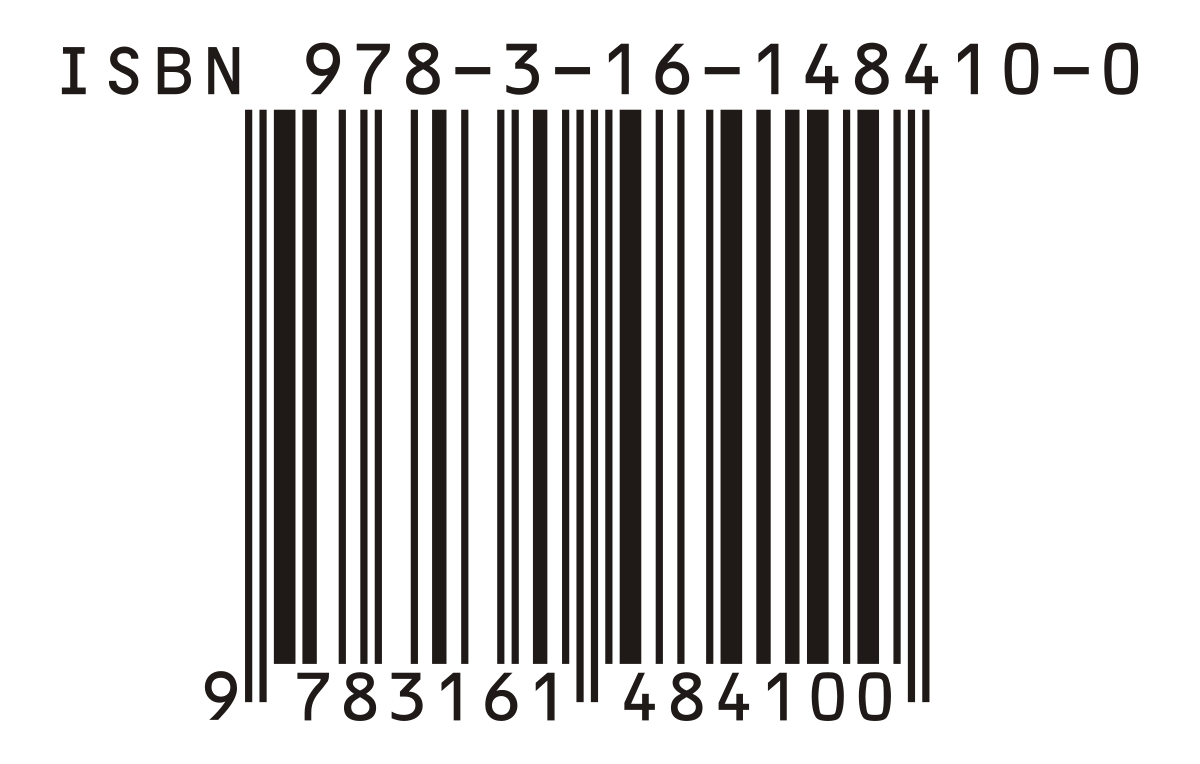
An ISBN can appear in distributor feeds, bookstore systems, library records, bibliographic databases, catalog pages, and an EAN-13 book barcode. Its value is cross-system interoperability: the same publisher-owned ISBN should follow the same unchanged product through participating channels.

What Is a Google Books Volume ID?

The Google Books API represents a book record as a Volume resource. The resource has an id field that Google describes as the unique identifier for that volume. This opaque alphanumeric value commonly appears in a Google Books URL after the id parameter and in API responses.

For example, a URL can take the form https://books.google.com/books?id=OIPXDwAAQBAJ. The alphanumeric value is useful for opening that Google record, storing a Google-specific reference, calling the API by volume ID, or embedding Google Books features.

A Google volume record can also expose industryIdentifiers such as ISBN-10 and ISBN-13 in its volumeInfo data. That illustrates the relationship: the volume ID identifies Google’s record, while the ISBN identifies the book product under an industry standard.

Do not assume that one conceptual work, one ISBN, and one Google volume record always map perfectly. Google can hold records for different editions, formats, or sources, and metadata fields may be incomplete or normalized differently. Verify the ISBN and product details before connecting records automatically.

What Is a GGKEY?

In Google Play Books Partner Center, a publisher adding a book without an ISBN or EAN can select “Get a Google book ID (GGKEY).” Google’s ISBN help states that an ISBN is not required to submit a book to Google Books or sell it on Google Play and that GGKEYs are only used internally within Google.

A GGKEY is therefore a platform identifier, not an ISBN substitute for external distribution. It can identify the book in Google’s partner workflow and appear in catalog searches or file-naming instructions, but it does not become a recognized ISBN in bookstore, distributor, or library systems.

Also avoid using “Google Book ID” without context. Some people mean the Google Books API volume ID; Partner Center documentation may use “Google book ID” when offering a GGKEY. Name the exact identifier in documentation, databases, and support requests.

Which Identifier Do You Need?

Use an ISBN when:

  • You want one standardized product identifier across book-industry systems.
  • A distributor, wholesaler, retailer, library vendor, or metadata recipient requires it.
  • You need to distinguish paperback, hardcover, language, edition, or separately available digital products.
  • You want a publisher or imprint recorded as the registrant or publisher of record under the applicable agency arrangement.

Use a Google Books volume ID when:

  • You are linking directly to a Google Books record or preview.
  • Your application retrieves or stores Google Books Volume resources.
  • You need to reference the exact Google result chosen after a search.

Use a GGKEY when:

  • You are adding a book without an ISBN or EAN in Google Play Books Partner Center.
  • Google offers the GGKEY option for that partner workflow.
  • You understand that the identifier remains internal to Google and will not support wider ISBN-based distribution.

You do not choose between an ISBN and a Google volume ID as if they perform the same job. If a widely distributed paperback is indexed in Google Books, keep its ISBN in the master product record and store the Google volume ID in a separate platform-ID field.

Four Practical Scenarios

Scenario 1: A self-publisher wants print and Google Play distribution

The paperback receives its own ISBN. If the ebook is a separately available product and the publisher chooses to identify it with an ISBN, it receives another. Google may create volume records with Google volume IDs for each indexed record. If a Google-only book has no ISBN and the Partner Center permits it, Google can assign a GGKEY.

Scenario 2: A developer builds a book-search feature

The application searches Google Books with an ISBN query, checks the returned industryIdentifiers, and stores both the ISBN and selected volume.id. The ISBN supports product matching across sources; volume.id supports deep links and future Google API calls. Low-confidence or conflicting edition matches go to review.

Scenario 3: A library record and Google result disagree

The same title appears as a hardcover in a library catalog and an ebook in Google Books. Do not merge them by title. Compare ISBN, publisher, publication date, language, edition statement, and format. Different products should retain different ISBNs and may have different Google volume IDs.

Scenario 4: A book has no ISBN

A publisher can still add an eligible book to Google’s partner system if the current workflow offers a GGKEY. That makes the item manageable inside Google, but it does not create cross-industry identification. If wider distribution later requires an ISBN, obtain and assign the correct ISBN through the applicable national process; do not relabel the GGKEY as an ISBN.

How to Map ISBNs to Google Books Records

1. Start with a clean product record

Record the ISBN-13, ISBN-10 if applicable, title, contributors, publisher or imprint, language, edition, format, and publication date. Keep one row per product.

2. Query Google Books by ISBN

Use the Google Books API ISBN query or search the exact number in Google Books. ISBN matching is more precise than title-only matching but still requires verification.

3. Inspect the returned Volume resource

Compare industryIdentifiers and descriptive fields with the master record. Reject a result that represents another binding, language, edition, or publisher.

4. Store identifiers in separate fields

Use fields such as isbn13, isbn10, google_volume_id, and ggkey. Do not overload one generic book_id column unless it also stores the identifier type and issuing system.

5. Handle multiple and missing matches

Keep multiple candidate volume IDs when Google has distinct records, select a canonical match using documented rules, and log confidence. Do not manufacture a Google ID or substitute an ISBN when no Google record is found.

6. Recheck important metadata

API and catalog records can change. Save the source and retrieval date, respect current API terms and quotas, and refresh data that affects live links, availability, or display.

Common Identifier Mistakes

  • Calling ISBN Services, Google, or a retailer the official U.S. ISBN agency; Bowker holds that role.
  • Treating a Google volume ID or GGKEY as a globally recognized ISBN.
  • Using the same ISBN for paperback, hardcover, and ebook products.
  • Claiming every ebook or every retail platform requires an ISBN.
  • Merging records by title without checking edition, language, and format.
  • Assuming a Google volume ID and GGKEY are always the same identifier.
  • Putting a Google identifier into an ISBN or EAN barcode field.
  • Assuming an identifier guarantees accurate metadata, discoverability, sales, or copyright ownership.

Frequently Asked Questions

Can a Google Books ID replace an ISBN?

No. A Google volume ID or GGKEY works within Google’s systems. It is not the international product identifier used across ISBN-based supply-chain systems.

Does Google Books require an ISBN?

No. Google states that an ISBN is not required to submit a book to Google Books or sell it on Google Play. For books without an ISBN or EAN, eligible Partner Center workflows can provide a GGKEY.

Where do I find the Google Books volume ID?

Open the Google Books record and look for the opaque value associated with the id parameter, or read the id field of the Volume resource returned by the Google Books API.

Where do I find the GGKEY?

It appears in Google Play Books Partner Center after Google assigns it to a book without an ISBN or EAN. Partner documentation and catalog search may display it with the GGKEY prefix.

Can one ISBN have more than one Google volume ID?

Google’s record model and source ingestion can produce multiple candidate records or edition relationships. Design workflows to verify industryIdentifiers and product metadata instead of assuming a permanent one-to-one mapping.

Does an ISBN improve Google ranking?

An accurate ISBN can help systems match a product and connect metadata, but it is not a ranking guarantee. Search visibility also depends on content quality, metadata consistency, indexing, links, demand, and platform behavior.

Can I put a GGKEY in a barcode?

Not as an ISBN. A standard book barcode encodes an ISBN-13 within EAN-13 conventions. Follow Google’s file and catalog instructions for GGKEYs instead.

The Bottom Line

Use the ISBN as the portable industry identifier for a specific edition and format. Use the Google Books volume ID to reference a Google Books Volume record. Use a GGKEY only for Google’s internal partner workflow when no ISBN or EAN is supplied. Store all identifiers with their types, verify product-level metadata before mapping them, and never substitute a platform ID for an ISBN in external distribution.

Share This Post

More To Explore

We Can Help

drop us a line and keep in touch

Cyber Monday Offer End In

Hours
Minutes
Seconds