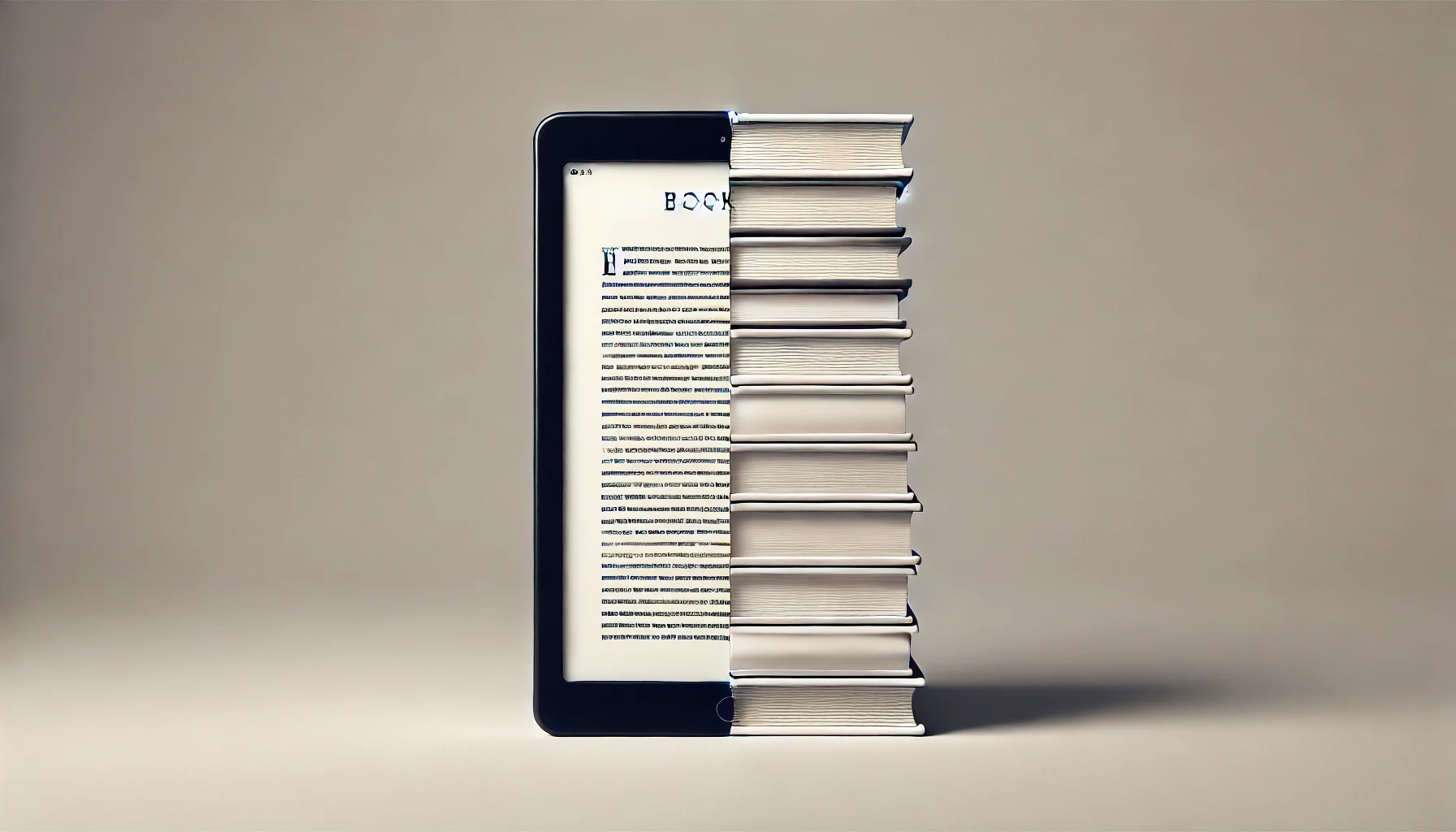
Ebooks are usually better for instant access, portability, adjustable text, and low-risk global distribution. Physical books are usually better for ownership, gifting, collecting, distraction-free reading, and visual or tactile projects. Neither format wins every category. The best choice depends on how the book will be read, sold, shared, and produced.
For many readers and publishers, the strongest answer is not ebook or print. It is a format strategy: use digital editions for reach and convenience, then add paperback or hardcover editions when the audience values a physical object.
Ebook vs Physical Book at a Glance
|
Factor |
Ebook |
Physical book |
| Typical reader price | Often lower; no shipping | Often higher; discounts and used copies can change value |
| Access | Instant download | Store pickup or delivery |
| Portability | Large library on one device | One or a few copies at a time |
| Ownership | Usually licensed under platform terms | Physical copy can usually be lent, given, or resold |
| Accessibility | Adjustable when the file is well structured | Depends on edition; large print and braille are separate products |
| Focus | Searchable but device distractions are possible | Screen-free with stable page landmarks |
| Layout | Best for reflowable, text-led content | Best for fixed pages, gifts, workbooks, and display |
| Publishing risk | No unit inventory; fast updates | Per-copy production and fulfillment |
| Best fit | Travel, reference, fast global reach | Collecting, gifting, deep reading, visual projects |
If you only need a quick decision, choose an ebook when portability, speed, accessibility controls, and international delivery matter most. Choose print when ownership, gifting, annotation, display value, or screen-free reading matters most. Offer both when the same title serves different reading situations.
Are Ebooks Cheaper Than Paper Books?

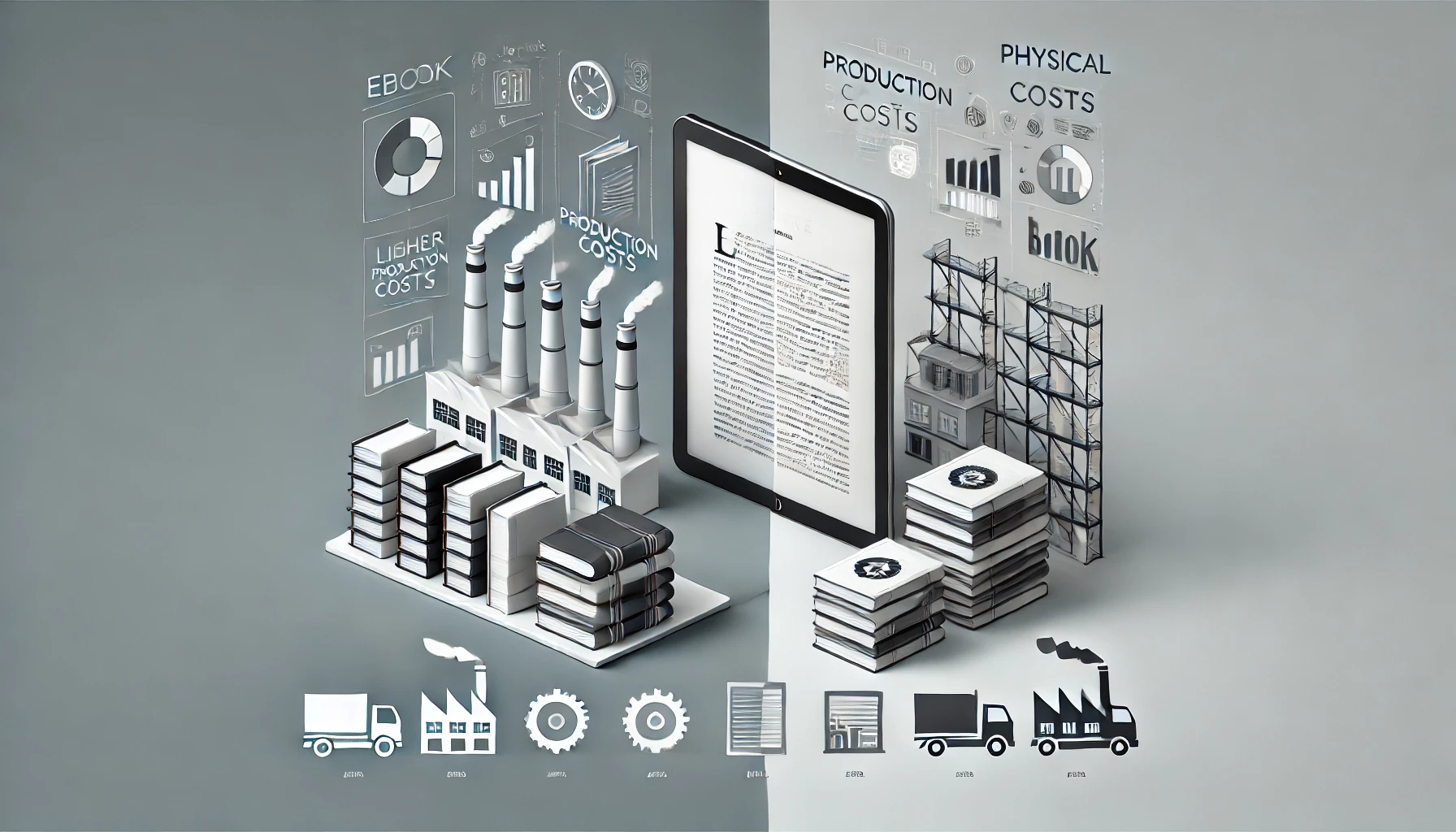
Ebooks are often cheaper at the point of sale because the publisher does not have to manufacture and ship each copy. They also avoid warehouse space, damaged inventory, and returns. That does not mean a professional ebook is free to produce. Editing, cover design, conversion, quality assurance, distribution, and marketing still require work.
Physical books add a unit cost for paper, printing, binding, fulfillment, and freight. Print-on-demand reduces the need to buy inventory in advance, but each copy generally costs more to manufacture than a large offset print run. A publisher should compare contribution margin—not just list price—after retailer discounts, print cost, delivery fees, and royalties.
Readers should compare total value rather than assuming the digital edition is always the bargain. A discounted paperback, library loan, used copy, or resold textbook may cost less over its useful life. An ebook may offer better value to a traveler who would otherwise pay shipping or carry several books.
Seven Differences That Actually Affect the Decision
1. Access and portability
An ebook can be delivered within minutes and stored with hundreds of other titles on one phone, tablet, computer, or e-reader. That makes digital editions useful for travel, commuting, reference, and global readers. A physical book requires delivery or a store visit, but it works without an account, battery, compatible app, or internet connection after purchase.
2. Ownership and lending
A printed copy is a physical object. The owner can usually lend, give, display, donate, or resell it. Digital purchases are commonly governed by a retailer or platform license, and lending, sharing, downloads, and device access may be limited by that platform. Before buying or publishing an ebook, review the store’s current terms rather than assuming the file can be transferred like a paperback.
3. Reading focus and comprehension
Print creates stable page landmarks and removes app notifications, links, and multitasking from the reading surface. Those qualities can help some readers focus on long or complex material. Digital reading can be equally effective when the device is configured for focused reading, but skimming behavior and distractions can reduce comprehension. The evidence is context-dependent, so avoid claiming that one format is universally better for learning.
A 2023 meta-analysis in Review of Educational Research found a negative relationship between leisure digital reading habits and text comprehension, while emphasizing differences by context and type of reading. For practical use, match the format to the task: print may suit deep study; searchable digital text may suit fast reference.
4. Accessibility and personalization
Well-made reflowable ebooks can let readers enlarge text, change fonts and spacing, switch contrast, use a screen reader, or listen through text-to-speech where permitted. These features can be essential rather than optional. Accessibility depends on the file: scanned pages, missing headings, poor reading order, and unlabeled images can make a digital book harder to use.
Physical large-print, braille, and accessible-format editions also serve important needs. Publishers should not treat “digital” as a synonym for “accessible”; they should test the EPUB’s structure, navigation, image descriptions, and reading order.
5. Visual design and interaction
Reflowable ebooks adapt to a screen and reader settings, which is ideal for novels and text-led nonfiction. Fixed-layout ebooks preserve composition but can be harder to read on small screens. Cookbooks, art books, children’s picture books, workbooks, and heavily designed manuals may provide a better experience in print or in a carefully tested fixed-layout format.
6. Durability, resale, and collectability
A well-made book can remain readable for decades and can be signed, displayed, resold, or passed between generations. It can also be lost, damaged, or take up significant space. A digital library does not create shelf clutter and can be backed up through a platform account, but long-term access depends on accounts, devices, file formats, and retailer policies.
7. Publishing reach and business risk
An ebook lets an author test demand without committing to inventory. Updates can be uploaded more quickly, and distribution is not constrained by shipping. Print editions can reach gift buyers, libraries, bookstores, events, and readers who avoid screens. Publishing both formats broadens the addressable audience, but each edition needs its own production checks, metadata, pricing, and identifier decisions.
ISBN Rules for Ebook and Print Editions
The International ISBN Agency states that separate product forms and editions require separate ISBNs. A paperback, hardcover, and an ebook assigned an ISBN are distinct products and should not share one number. An unchanged reprint in the same format normally keeps its ISBN.
Amazon KDP currently requires an ISBN for paperback and hardcover books. KDP does not require an ISBN for a Kindle ebook; Amazon assigns its own ASIN. If you assign an ISBN to an ebook for broader distribution, do not reuse the paperback or hardcover ISBN.
Plan identifiers before uploading files. Changing a product’s format, publisher of record, language, or edition can trigger a new-ISBN requirement. When the case is unclear, confirm it with the ISBN agency responsible for your country.
Three Real-World Publishing Scenarios
Scenario 1: A first-time novelist with a small budget
Start with a professionally formatted reflowable EPUB and a print-on-demand paperback. The ebook provides immediate global availability, while the paperback serves readers who want a physical copy. Add hardcover only after demand or gifting opportunities justify the extra setup. Assign separate ISBNs to the paperback and hardcover; decide whether the ebook needs its own ISBN based on the distribution plan.
Scenario 2: A workbook or highly illustrated guide
Prioritize print because readers may need to write, compare spreads, or view precise layouts. Offer a digital companion only after testing it on small and large screens. A downloadable PDF may preserve layout, but it is not a substitute for an accessible, reflowable EPUB when major retailers or assistive technologies require structured content.
Scenario 3: A frequently updated professional handbook
Use an ebook for rapid revisions and searchable reference, then publish dated print editions for teams, events, or training. Put the edition statement in the metadata and front matter. A substantial revision should be treated as a new edition and receive a new ISBN for each affected product form.
How to Turn a Physical Book Into an Ebook
If you own the publishing rights and source files, begin with the editable manuscript—not a scan or print PDF. Clean styles, remove manual tabs and repeated spaces, use real headings, set a logical reading order, add alt text, and convert to EPUB. Then validate the file and test it in more than one reading app.
When only a printed copy or image-based PDF exists, optical character recognition can recover text, but it introduces errors. Budget for proofreading, paragraph reconstruction, image handling, footnote repair, and accessibility work. A conversion that merely looks acceptable on one screen is not ready for distribution.
Pre-publication ebook checks
- The table of contents links to the correct sections.
- Body text reflows without clipped lines or forced page breaks.
- Headings are structural, not just larger or bold text.
- Images are clear, rights-cleared, and described when needed.
- Links work and do not depend on a private local file.
- The title, author, publisher, language, and identifier metadata are accurate.
- The EPUB passes a validator and is tested in representative apps and devices.
Decision Checklist
- Choose ebook first when readers need instant, portable, searchable, adjustable content.
- Choose print first when the book is a gift, collectible, workbook, display object, or screen-free reading experience.
- Offer both when audience segments have different preferences or buying situations.
- Calculate margin after retailer deductions, manufacturing, returns, and delivery—not from list price alone.
- Create and test each product form separately.
- Assign separate ISBNs where required and never reuse a print ISBN for a distinct ebook product.
Frequently Asked Questions
Are ebooks always cheaper than physical books?
No. Ebooks often have a lower list price and no shipping charge, but discounts, used-book prices, library access, subscriptions, and resale value can change the comparison.
Do people remember more from physical books?
Some research finds a print advantage for comprehension in certain settings, especially for longer or more demanding reading. The result depends on the reader, device, distractions, text type, and reading purpose, so it should not be treated as a universal rule.
Is an ebook more environmentally friendly?
It depends on the device’s manufacture and lifetime, how many books are read on it, the energy mix, printing choices, shipping, and whether physical copies are reused. Avoid simple “paperless equals zero impact” claims.
Can I use the same ISBN for an ebook and paperback?
No. They are different product forms. KDP does not require an ISBN for a Kindle ebook, but if an ebook has an ISBN, it must not reuse the paperback’s number.
What ebook format should I publish?
For most text-led books, use a validated reflowable EPUB. Retailers may convert or package the file for their own systems. Use fixed layout only when the design genuinely requires it and test it carefully.
Should a self-published author release both formats?
Usually, if the budget allows. Ebook plus print-on-demand paperback covers the widest common reading preferences without requiring a large inventory purchase.
The Bottom Line
Ebooks win on speed, portability, customization, and low-inventory distribution. Physical books win on tangible ownership, gifting, display value, screen-free focus, and layouts that benefit from a fixed page. The practical strategy is to identify the audience’s reading situation, produce the format that serves it best, and add a second format when the extra reach outweighs the production work.
Need help preparing a retail-ready digital edition? Review ISBN Services’ ebook conversion service, ebook formatting guide, and ebook distribution options. For print identifiers, see the guide to hardcover and paperback ISBNs.